
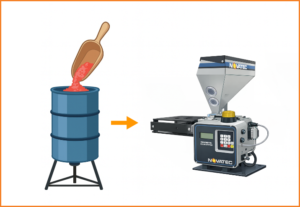
 The simplest approach was manual dosing—measuring colorant or additives by hand and introducing them into the material flow. A scoop, a scale, careful attention, and hope for the best. The problems were obvious: human error, inconsistent dosing, no real mixing, and significant waste from over-dosing “to be sure” enough additive made it into every part.
Manual dosing worked when volumes were low and specifications were loose. But as production ramped up and customers demanded tighter tolerances, processors needed automated solutions.
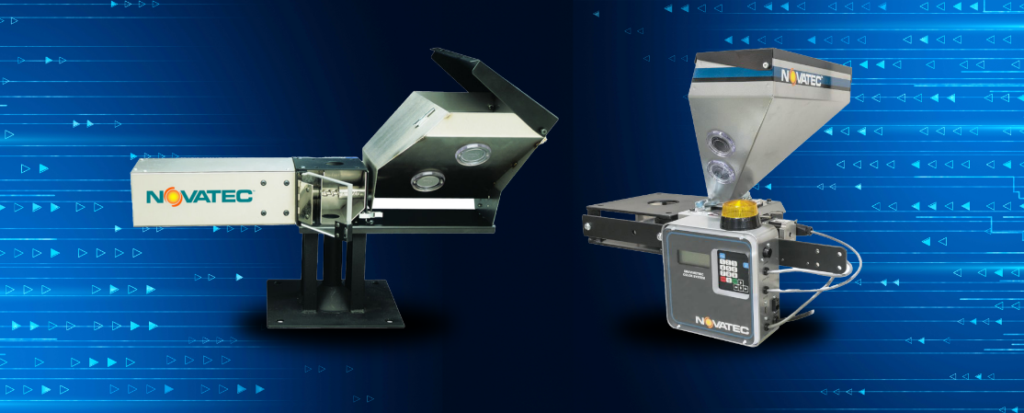
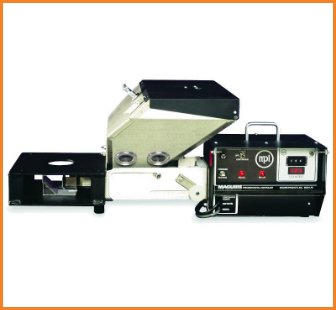 The first automated feeding devices were volumetric dosers—simple machines that used a rotating auger to meter material based on time and volume. The concept was elegant: the space between auger flights represented a known volume, and by calibrating the relationship between that volume and the actual weight of material, processors could dose at a predictable rate.
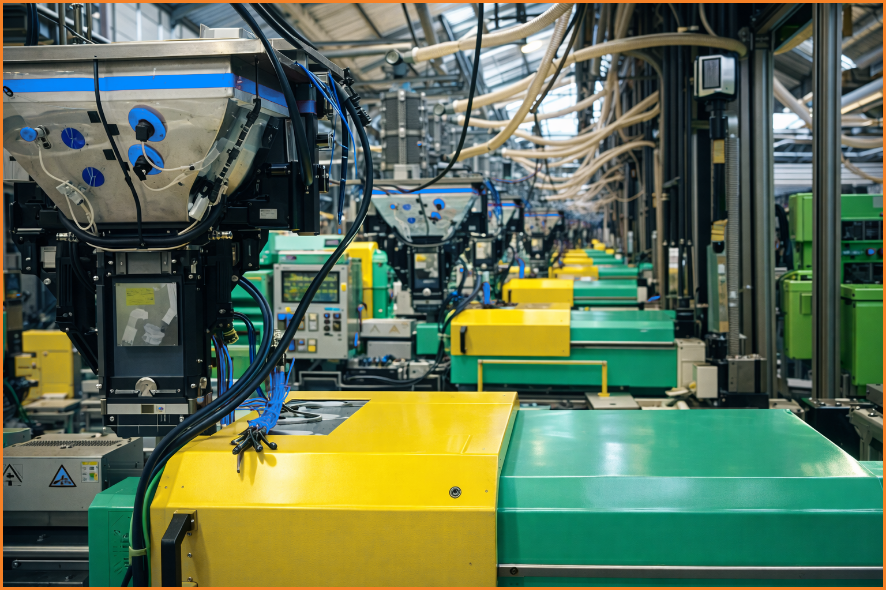
These devices mounted directly to the machine throat via an adaptor that created a void in the material flow, allowing the dosed additive to join the stream of base resin. A variable-speed DC motor controlled the auger rotation, and in injection molding applications, the doser synchronized with the press cycle to deliver a measured amount of colorant with each shot.
Volumetric dosing represented a major step forward from manual methods. But significant problems remained:
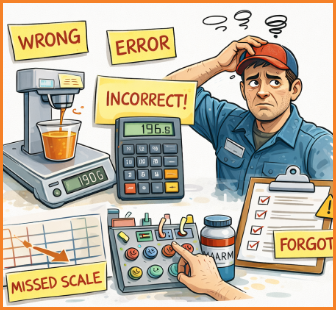 Change colorants? Recalibrate. Switch additives? Recalibrate. New material lot arrives? Recalibrate.
The “catch and weigh” ritual became a fact of life: collect dosed material in a cup, weigh it on a scale, calculate how far off you are, twist some knobs, try again. For shops running multiple colors across multiple machines, calibration became a part-time job. And every calibration cycle introduced new opportunities for operator error—wrong calculations, misread scales, forgotten adjustments.
 Volumetric feeders assumed a consistent relationship between auger volume and material weight. But that assumption broke down constantly. As colorant levels dropped in the supply hopper, material flow changed. If materials bridged or didn’t flow smoothly, the auger might move air instead of material. If bulk density varied between batches of the same colorant, the weight-per-revolution changed. The feeder had no way to detect these problems—it simply kept rotating at the programmed speed, delivering whatever happened to fall into the auger flights.
The result? Processors over-dosed “to be safe,” wasting expensive colorant to ensure minimum additive levels under all conditions. This safety margin added up quickly. Even small amounts of over-dosing—an extra 0.5% here, an extra 1% there—represented thousands of dollars in unnecessary material costs across a year of production.
 Early DC motors had speed control issues. They would drift as they operated, and when de-energized at cycle end, they often dribbled to a stop rather than stopping cleanly. This meant the actual dose varied shot-to-shot, even when settings remained constant. For applications where color consistency mattered, this variation showed up as visible color shifts from part to part.
 The solution came from a simple insight: stop assuming what the auger is delivering, and start measuring it.
Gravimetric feeders added load cells under the supply hopper and weight-based control logic. Instead of hoping the relationship between auger rotations and material weight stayed constant, the system tracked actual weight loss continuously during operation.
The concept was transformative: mount the supply hopper on load cells, monitor the loss-in-weight as material feeds, and automatically adjust auger speed to maintain the target dose. If bulk density changes, the system detects it immediately through weight readings and compensates. If material flow becomes erratic, load cells catch the variation and correct it. If the hopper runs low and material packs differently, the feeder adjusts automatically.
This single innovation dramatically reduced both major problems with volumetric feeding: frequent calibration procedures were minimized since the system weighed material continuously and made automatic adjustments, and accuracy improved dramatically because dosing was controlled by actual weight rather than assumed volume.
Today’s gravimetric feeders measure weight continuously—tracking every gram that leaves the hopper—and adjust auger speed in real-time to hit the target dose within ±0.2% accuracy. Process variations that would throw off a volumetric feeder get caught and corrected automatically. The system generates complete material usage records as a natural byproduct of operation, supporting both quality documentation and cost accounting.
What began as a solution to colorant waste became the foundation of modern precision feeding technology. Today’s gravimetric feeders deliver laboratory-grade accuracy in production environments, eliminating overdosing waste while ensuring consistent product quality.
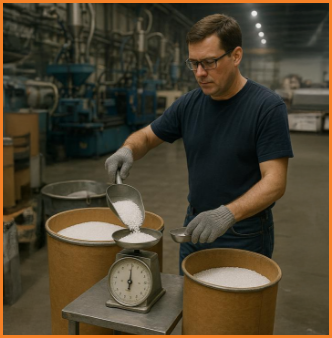 Manual methods represent the lowest equipment investment but the highest operational cost. An operator measures colorant by weight, dumps it into the material stream, and hopes for adequate mixing. Unless a separate mixer is installed, blending is minimal.
Summary: Lowest initial investment, but labor intensive with high error rates. Results in excessive use of expensive additives, poor quality control, high reject rates, and customer dissatisfaction. Manual dosing has no place in modern production environments.
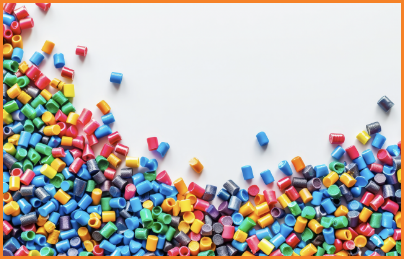 Some processors avoid dosing equipment entirely by purchasing pre-colored materials. The material supplier handles all color compounding, and the processor simply molds or extrudes the finished product.
The advantages are simplicity and consistency—no dosing equipment to maintain, no calibration procedures, no color dosing errors. But the costs are substantial: pre-colored materials command significant price premiums over natural resins, you’re locked into buying large minimums of each color, inventory carrying costs multiply, and any specification changes require extensive lead times for new material formulation and testing.
Summary: No equipment investment, but highest material costs and largest inventory commitment. Changes in specifications or colors may leave you with unusable material. Every color variation requires separate inventory management and warehouse space.
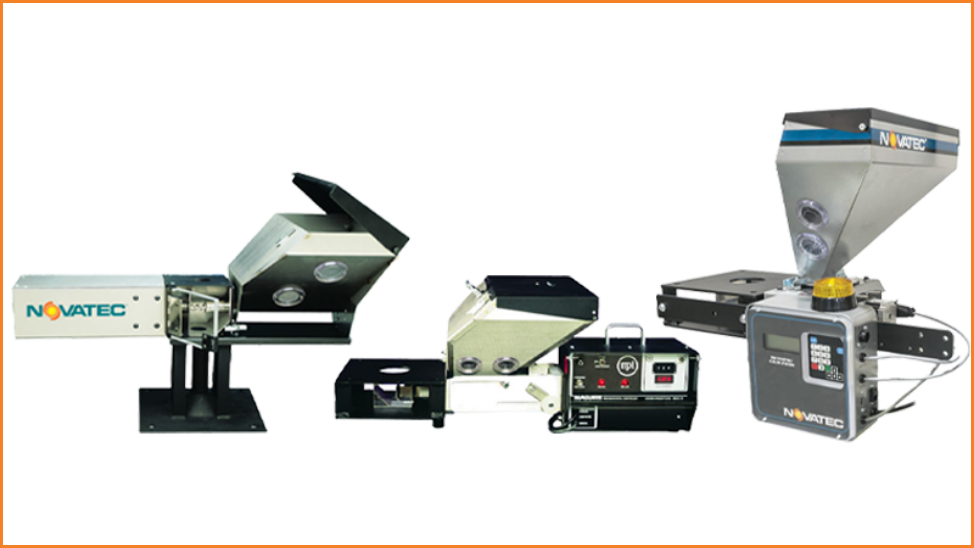
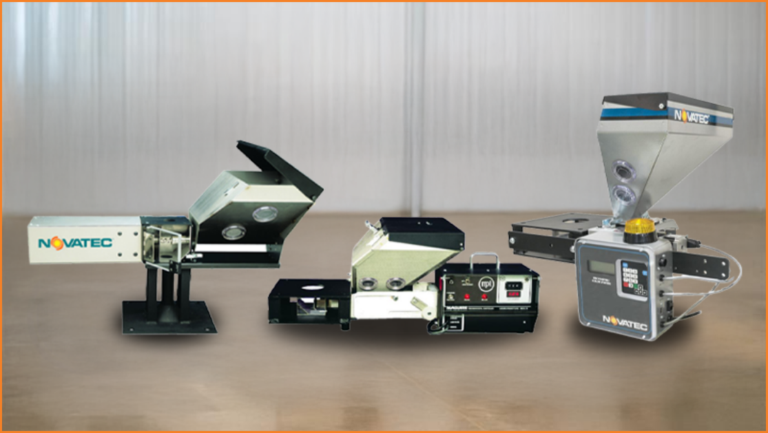
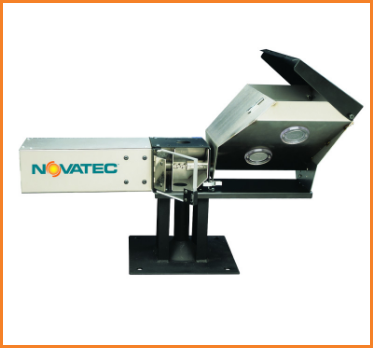 Volumetric feeders use an auger driven by a variable-speed motor to meter material based on time and volume. The relationship between auger flights (volume) and material weight is established through calibration, allowing the processor to dose at specific rates.
The advantages are simplicity and lower equipment cost compared to gravimetric systems. A DC motor, an auger, a supply hopper, and basic controls provide automated dosing directly at the machine throat.
The disadvantages are accuracy and the constant need for calibration. Volumetric feeders measure nothing during operation—they simply rotate the auger at a programmed speed and assume consistent material flow. Any change in bulk density, material flow, or hopper level that affects the actual weight dispensed goes undetected. The feeder has no feedback mechanism to catch these variations.
This leads to two problems: processors over-dose to ensure minimum additive levels under all conditions (wasting expensive colorant), or they experience color inconsistencies and quality problems when actual dosing falls below target.
Summary: Medium equipment investment, but marginal accuracy dependent on frequent calibration. Higher material costs from over-dosing, increased labor from calibration procedures, and limited quality control. May be acceptable where product appearance and properties aren’t critical.
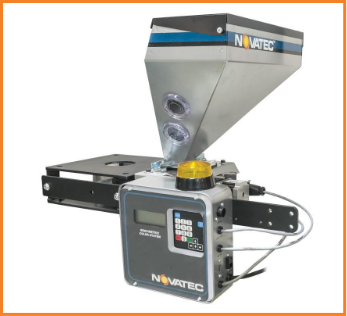 Gravimetric feeders use load cells to continuously monitor the loss-in-weight of the supply hopper, allowing real-time adjustment of auger speed to maintain precise dosing by actual weight—the same unit of measure on which specifications are based.
The supply hopper mounts on load cells that take constant weight readings. As the auger rotates and dispenses material, the system tracks exactly how much weight has been lost from the hopper. If the target calls for 50 grams per shot (or 50 grams per minute in extrusion), the feeder automatically adjusts auger speed to hit that target regardless of material variations.
After initial setup, the unit weighs each dose and makes automatic adjustments to ensure accuracy, dramatically reducing the frequent calibration cycles required by volumetric feeders. Periodic calibration ensures the load cells continue weighing correctly over time. Changes in bulk density, material flow, or processing rate are detected immediately through weight readings and corrected automatically. Sophisticated control algorithms filter out vibration interference—a critical capability for injection molding environments where machine vibration had historically made gravimetric systems impractical.
The result is ±0.2% accuracy through continuous self-correction, elimination of wasteful over-dosing, consistent product quality, and complete documentation of material usage for cost control and quality assurance.
Modern control systems make gravimetric feeding accessible to operations of all sizes. Touch-screen interfaces allow operators to input target dosing rates in intuitive percentage or weight-per-shot formats. The system handles all calculations and adjustments automatically.
Summary: Highest initial equipment cost, but rapid ROI from material savings and quality improvements. Hands-free operation reduces labor costs. Gravimetric dosing delivers significant reductions in additive costs, increased product quality and customer satisfaction, faster material changeovers, and complete material consumption documentation.
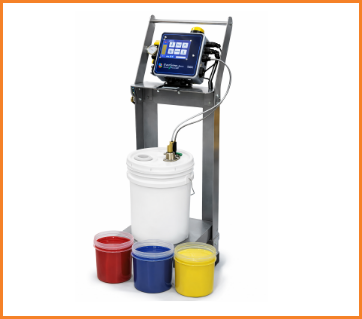 Liquid colorants offer unique advantages for certain applications, particularly where excellent dispersion and low additive percentages are required. Liquid color is administered at the machine throat using peristaltic pumps that precisely meter liquid colorant into the material stream.
The liquid colorant adheres to pellet surfaces and disperses effectively during the melting process. In many cases, the process itself provides adequate mixing without requiring separate mixing equipment.
Liquid color systems integrate directly with gravimetric controls to provide the same precision and documentation benefits as solid colorant feeding.
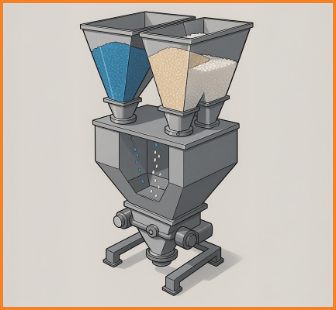 Gravimetric feeders operate on a loss-in-weight basis. The supply hopper sits on a set of load cells that continuously monitor its weight. As material feeds into the process, the system tracks exactly how much weight has been lost from the hopper. This provides real-time verification that the target amount of material has actually been dispensed.
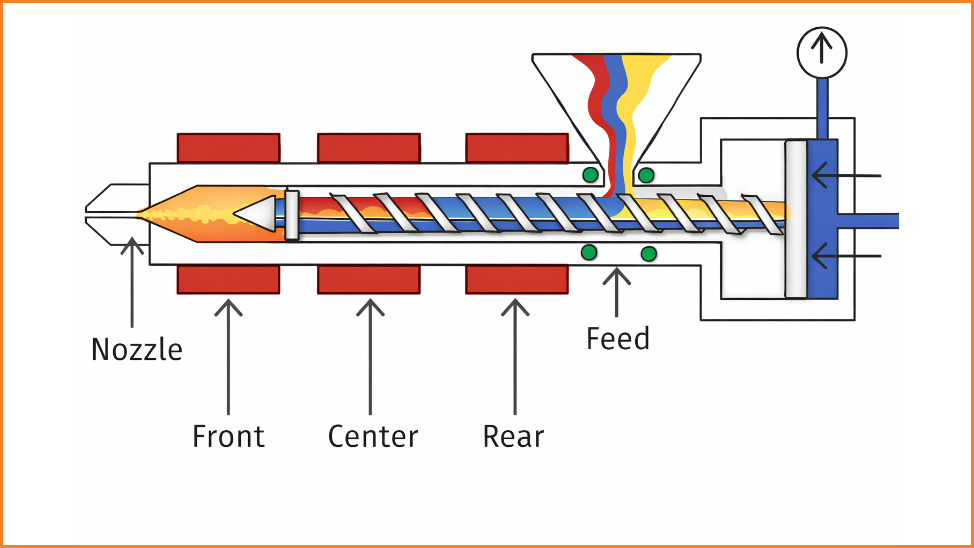
For injection molding applications, the feeder synchronizes with the press cycle. When the screw retracts (signaling a shot has been made), the feeder doses the programmed amount of colorant or additive. The loss-in-weight measurement confirms that the correct amount was dispensed. If the system detects any deviation, it automatically adjusts the next dose to compensate.
For extrusion applications (continuous processes), the feeder runs continuously and adjusts auger speed in real-time to maintain the target feed rate. If material flow changes or process speed varies, the feeder detects this through weight readings and responds immediately.
 One of the critical innovations in modern gravimetric feeding is sophisticated vibration filtering. Injection molding machines generate significant vibration—especially on fast-cycling presses—that historically made weight-based systems impractical.
Advanced control algorithms take numerous weight readings and filter out readings affected by vibration, averaging the remainder for extremely accurate weight monitoring. This breakthrough made gravimetric feeding practical for injection molding environments where vibration had previously been a barrier.
 Because the system weighs material continuously, small variations in bulk density, material flow, or hopper level are detected immediately and corrected automatically. The feeder adjusts auger speed or duration to hit the weight target regardless of material characteristics.
This self-correction dramatically reduces the frequent manual “catch and weigh” calibration cycles required by volumetric feeders. While periodic calibration of the load cells is still needed, operators can change materials, adjust dosing rates, or modify process conditions without constant recalibration.
 Since every gram of material is weighed as part of normal operation, gravimetric feeders generate comprehensive data on material consumption. This information supports quality documentation requirements (ISO compliance, customer audits), enables accurate cost accounting by job or product, and helps identify opportunities for further material optimization.