

Resin Dryer Installation
Review the important considerations you need to make when determining which type of plastics resin drying installation is right for your facility.
By Mark Haynie and Joshua Belisle · Edited by Dana Gardner
Published August 7, 2024 · Reviewed by Mark Haynie · August 5, 2026
Summary
Should I install resin dryers at the machine or centrally?
It depends on the type of processing. Extrusion, blow molding and long-run injection molding usually benefit from dryers and hoppers on or near the processing machine, while injection molders that run multiple materials and change materials and molds frequently benefit from remote, central drying equipment. Whichever you choose, at least 2 inches of hopper insulation and insulated hot-air hoses cut heat loss and energy cost.
You have lots of latitude when choosing a drying system. This section reviews those choices with an eye towards what kind of installation choices you have to make. Your decisions will influence the initial cost and the efficiency and performance of your drying system for years to come.
Machine vs. Central Installation Configurations
In broad terms, you have two basic choices about where to place your dryers and drying hoppers.
- On or near processing machines
- Remote, central location away from the production floor
Your choice will be largely determined by the type of processing you do.
- Extrusion, blow molding and long-run injection molders may benefit by locating drying systems on or near processing machines
- Injection molding operations using multiple materials and frequently changing materials and molds, benefit from remote placement of drying equipment
Four Steps for Energy-Saving Installation
You can take some simple steps to ensure minimal heat loss during the drying process, which will pay nice dividends by reducing energy costs.
1. Hopper Insulation
Manufacturers do not always follow the same rules. It is up to you to ensure that the hoppers you buy have at least 2″ thick insulation sandwiched between the walls of:
- Hopper sides
- Hopper access doors
- Hopper cone
It is not necessary to have insulation above the normal material level in the hopper because that is where cooler material enters the hopper and air is returning to the dryer.
2. Dryer Insulation
Proper application of insulation to the following dryer components can also reduce heat loss.
- High temperature flex hose carrying hot air to hopper cone
- Hard metal ducting carrying hot air to dryer cone
- High temperature flex hose carrying hot air within the dryer cabinet (depending on space and practicality)
Note: Do not insulate the hose returning air from the top of the hopper to the dryer.
3. Proper Process Heater Placement
- This depends largely on the size of the system and the distance between the dryer and hopper
- Small systems include the process heater within the dryer cabinet
- Larger systems (where distance between dryer and hopper are greater) should have the process heater mounted on the dryer to minimize heat loss
4. Tight Hose Connections

Process Integration/Layout of Drying Systems
The integration of a drying system into a process workflow for plastic processing can make a big difference in the success of your drying task, the ease of service, and the need for additional equipment.
An Overview of Resin Drying Equipment
Drying systems are typically made up of two major components – the dryer and the drying hopper. The dryer typically provides heated, dry air to the hopper and is connected to utilities which depends on the dryer type. These may include:
- Electrical supply
- Gas supply
- Compressed air
- Water
The drying hopper is the vessel that holds your plastic material and it is connected to the dryer with hoses or tubing for the transfer of heated, dry air to the hopper for drying.
The hopper is typically equipped with:
- A vacuum loader or vacuum receiver to fill the hopper
- A slide gate at the bottom to allow the material to be drawn out of the hopper to the process machine
- A port, to allow materials to be drained from the hopper for material changeover
- Insulation to maintain resin temperature
Some dryers combine these components into a single cabinet or onto a common stand or cart for easy installation and/or portability.
Resin Drying Equipment Location
There are several choices when it comes to dryer location.
- Machine-mounted dryer advantages include:
- No chance of material loss, contamination or exposure to ambient air that might cause moisture pickup
- Ideal for systems dedicated to a single material
- Drying hoppers mounted directly on the machine throat may allow gravity flow to the machine throat, eliminating the need for additional receivers or loaders (this does not work with batch-drying equipment)
- Off-machine dryer location advantages include:
- No need to climb on ladder for hopper cleanout
- Easy access to loaders and dryer for maintenanc
- Portable Drying Systems
- These compact systems usually integrate a dryer, hopper and loader on single cart with casters for easy transfer from one process machine to another. The cart size usually gets impractical with throughputs over 200 lb./hr.
- Mezzanine Mounting:
- Dryers may be mounted on a mezzanine directly above the process machines they supply
- The mezzanine may be used as a location for the drying equipment that saves floor space and allows any dryer to supply dry material to a number of processing machines, below
- Ideal to minimize equipment on processing floor and for clean rooms
- Reduces initial cost of system and installation
- Central Drying System: Dries multiple materials with a single central dryer
Layout Considerations
Moving fresh material to the drying hopper (and in many cases, moving dried material away from the hopper) is a large factor when considering layout. Any equipment needs to be occasionally serviced, and loading equipment high atop a large drying hopper is no exception, so it should be taken into consideration. When transferring dried material, considerations should be made as to distance and how often the material will be moved and how long it will be at rest away from the drying hopper before it is consumed by the processing machine. As a result, purging the take-away material line of all dried material after each load should be considered.
For this, a purge valve at the base of the hopper is employed which allows conveying air to sweep the transfer line clean after the purge valve closes off material flow from the hopper. In many cases, using a separate or ‘borrowed’ supply of dry air for conveying is recommended, so that even during conveying, the material is in contact with only dry, not ambient air.
In some cases, typically for larger drying systems, additional equipment for filtering closed loop dry air or coolers for the drying air stream are required and their location close to the drying process can drive the location of the drying systems dryer and hopper.
In summary, the flow of fresh material from storage, to the drying system and finally to the processing machine(s) should be fully examined, along with the need for all additional pieces of support equipment before a layout decision is made for a drying system. In addition, service of all associated devices should be considered.
Frequently Asked Questions
How much insulation should a drying hopper have?
At least 2 inches of insulation sandwiched between the walls of the hopper sides, access doors and cone. Manufacturers do not follow the same rules, so confirm this before buying. Insulation is not needed above the normal material level, where cooler material enters and air returns to the dryer. Do not insulate the return-air hose from the hopper top back to the dryer.
What are the advantages of a machine-mounted dryer?
Material is not lost, contaminated or exposed to ambient air, so it does not pick up moisture after drying. The arrangement suits systems dedicated to a single material, and a hopper mounted on the machine throat may gravity-feed the machine, removing the need for a separate receiver or loader (this does not work with batch-drying equipment). The trade-off is ladder access for hopper cleanout and loader service.
When does a portable drying system make sense?
Portable systems combine a dryer, hopper and loader on a single cart with casters so the unit can move from one process machine to another. They are a practical choice at lower throughputs; the cart size usually becomes impractical above about 200 lb/hr. For larger or multi-machine needs, mezzanine mounting above the machines or a central drying system saves floor space and lets one dryer serve several machines.
About the Authors

Vice President of Moisture & Drying Technologies, Novatec
Mark Haynie has designed and installed resin drying systems for more than 40 years, working in thousands of plastics plants across the industry. As Novatec’s Vice President of Moisture & Drying Technologies, he leads the company’s drying technology group, including its work on moisture measurement and predictive drying. He also serves as a technical reviewer for Novatec’s Drying Knowledge Center and has authored numerous technical articles and whitepapers on resin drying and moisture.
Mark earned a Bachelor of Science in Chemical Engineering from Virginia Tech.
Through Novatec’s Ask the Expert program, Mark regularly helps processors troubleshoot drying performance and resin-moisture challenges.

Technology Manager, Novatec
Joshua Belisle is Technology Manager at Novatec, where his work focuses on simulation and technology development for resin drying. He earned a B.S. in Mechanical Engineering with a minor in Engineering Business from the University of Virginia in 2023 and joined Novatec that same year. Joshua uses simulation tools to investigate previously difficult-to-measure aspects of the drying process, helping Novatec better understand airflow, heat transfer and other variables that influence resin-drying performance.
Related Articles
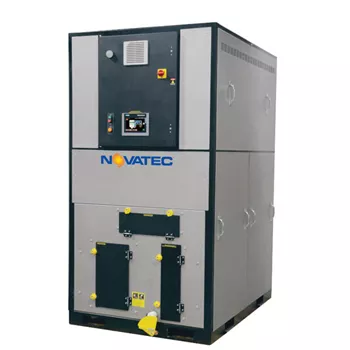
Understand how a central dry-air source serves multiple resin drying hoppers.
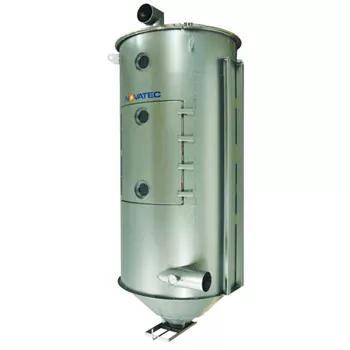
Review drying hopper construction and the features that support effective resin drying.

Review maintenance practices for dryer heaters, blowers, filters, and desiccant.
Ask the Plastic Drying Expert

Author Profile:
Mark has designed and installed resin drying systems for more than 40 years, working in thousands of plastics plants across the industry. He leads Novatec’s drying technology group, including its work on moisture measurement and predictive drying, and serves as the technical reviewer for the drying articles in the Knowledge Center. He has authored numerous technical articles and whitepapers on resin drying and moisture, including How to Optimize Resin Drying in Humid Weather, and answers processors’ drying questions through the Knowledge Center’s Ask the Expert program.