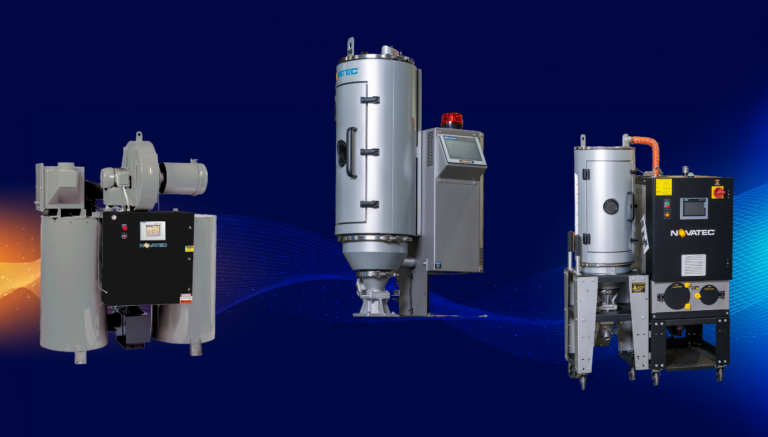
Central Resin Dryers
By Mark Haynie and Joshua Belisle · Edited by Dana Gardner
Published August 9, 2024 · Reviewed by Mark Haynie · July 28, 2026
Summary
How does a central resin drying system work?
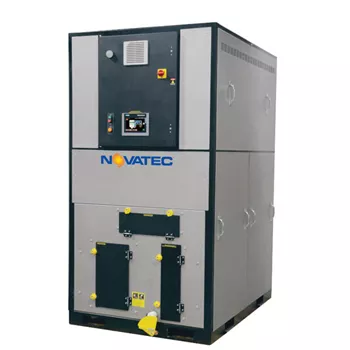
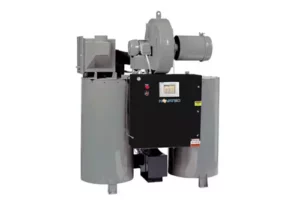
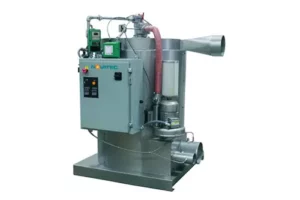
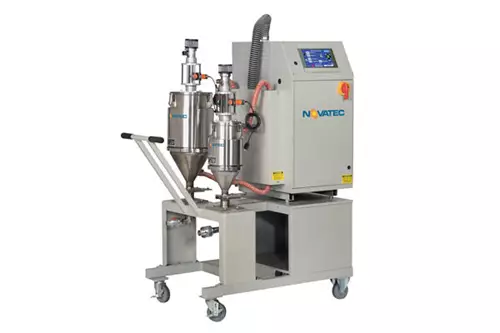
A central dryer produces one supply of dry, unheated air and distributes it through manifolds to several drying hoppers. Each hopper has its own heater, blower, and controls, so different resins can dry at different temperatures from one air source. Return air goes back to the central dryer in a closed loop. Either a dual bed desiccant dryer or a desiccant wheel dryer can serve as the central unit.
A central dryer is a system that provides a single source of dry, unheated air that is distributed to multiple material hoppers. Each hopper has its own heater, blower, and controls, allowing for the drying of multiple materials with varying drying parameters using the same dry air source. This is achieved using either a dual bed desiccant dryer or a desiccant wheel dryer as the central dryer. The system is designed to provide a centralized and automated method of drying plastic resin, reducing the need for individual drying hoppers and streamlining the drying process.
To implement the system, several drying hoppers equipped with heaters, blowers, and controls are needed, and are supplied as ‘central drying assemblies’. These assemblies are connected together using manifolds that carry the dry process air to the drying hoppers and the return air back to the central dryer in a closed loop. The air is re-dried and circulated back to the drying hoppers, allowing for consistent and controlled drying conditions for multiple materials.
The operation of a central drying system involves several components, including a central dryer, a conveying system, and individual drying hoppers. The plastic resin is first transported by the conveying system to the central dryer, which uses a heating element and a desiccant material to dry the resin. The dried resin is then transported by the conveying system to individual drying hoppers, where it is stored until it is needed for manufacturing.
The central dryer typically uses a desiccant material, such as silica gel or molecular sieves, to remove moisture from the air used to dry the resin. The system may also include a blower to circulate the drying air and sensors to monitor the temperature and moisture levels.
The central drying system offers several advantages over individual drying hoppers, including increased efficiency, reduced energy consumption, and improved quality control. By centralizing the drying process, the system can provide consistent and controlled drying conditions, ensuring that the plastic resin is of high quality and suitable for use in the manufacturing process.
Additionally, the central drying system can be customized to meet the specific needs of a plastics processing plant, with options for different conveying systems, drying capacities, and control systems. This allows the system to be tailored to the requirements of different manufacturing processes and products.

Types of Resin Drying Systems
Silo Dehumidification/ Hot Air Dryers
What is a silo dehumidifier and how does it work and compare with other resin drying systems?
The principle of compressing air in factories for power tools and other high-pressure uses has a side benefit for the world of resin drying.
What is a membrane resin dryer and how does it compare to a compressed air dryer without a membrane?
What is a vacuum resin dryer and how does it draw moisture away from plastic pellets in vacuum processing?
Dual Bed (also called Twin Tower) dryers used to be the most commonly purchased type of resin dryer. A look at why, and where the technology has progressed.
The advantages of desiccant wheel dryers include operating at a low temperature, which is important for preventing thermal degradation of the resin.
Technically, crystallizers are not dryers. They are used to convert PET from an amorphous, back to a crystalline state for re-processing.
Drying Hoppers for Plastic Resins
Drying hoppers are part of most drying systems. At a glance, they look much the same, but there are certain features you should look for.
What are the benefits of gas-fired process heaters for drying plastic resins?
Resin drying machines that can be moved from machine to machine within a plastics processing plant have advantages and disadvantages over a central drying system.
Properly designed Central Drying Assemblies are easily connected together to save installation costs.
PET Energy-Saving Drying Systems
Learn about the keys to drying PET efficiently while saving space and energy.
Frequently Asked Questions
What equipment does a central drying system need?
It needs a central dryer, drying hoppers fitted with their own heaters, blowers, and controls (supplied as central drying assemblies), and manifolds that carry dry process air out to the hoppers and return air back to the dryer. A conveying system moves resin to the hoppers and on to the machines. Sensors for temperature and moisture and a circulation blower are typically part of the package.
Can a central dryer dry different resins at the same time?
Yes. Because the central dryer only supplies dry, unheated air, and each hopper has its own heater, blower, and controls, each hopper can run its own temperature and drying parameters. One dry-air source can therefore serve several materials with different drying requirements at the same time, with return air from the hoppers going back to be re-dried in the closed loop.
What are the advantages of central drying over individual dryers?
Advantages cited are increased efficiency, reduced energy consumption, and improved quality control. A single dry-air source gives consistent, controlled drying conditions across the hoppers, and the system can be configured with different conveying options, drying capacities, and control systems to suit the plant. The central unit’s desiccant, typically silica gel or molecular sieve, removes moisture from the air before it is distributed.
About the Authors
Vice President of Moisture & Drying Technologies, Novatec
Mark Haynie has designed and installed resin drying systems for more than 40 years, working in thousands of plastics plants across the industry. As Novatec’s Vice President of Moisture & Drying Technologies, he leads the company’s drying technology group, including its work on moisture measurement and predictive drying. He also serves as a technical reviewer for Novatec’s Drying Knowledge Center and has authored numerous technical articles and whitepapers on resin drying and moisture.
Mark earned a Bachelor of Science in Chemical Engineering from Virginia Tech.
Through Novatec’s Ask the Expert program, Mark regularly helps processors troubleshoot drying performance and resin-moisture challenges.
Technology Manager, Novatec
Joshua Belisle is Technology Manager at Novatec, where his work focuses on simulation and technology development for resin drying. He earned a B.S. in Mechanical Engineering with a minor in Engineering Business from the University of Virginia in 2023 and joined Novatec that same year. Joshua uses simulation tools to investigate previously difficult-to-measure aspects of the drying process, helping Novatec better understand airflow, heat transfer and other variables that influence resin-drying performance.
Related Articles
Learn how resin moisture affects drying requirements and part quality.
Explore compressed air, membrane, and dual drying zone designs.
Compare dryer technologies by throughput, application, and maintenance needs.
Ask the Plastic Drying Expert
Author Profile:
Mark has designed and installed resin drying systems for more than 40 years, working in thousands of plastics plants across the industry. He leads Novatec’s drying technology group, including its work on moisture measurement and predictive drying, and serves as the technical reviewer for the drying articles in the Knowledge Center. He has authored numerous technical articles and whitepapers on resin drying and moisture, including How to Optimize Resin Drying in Humid Weather, and answers processors’ drying questions through the Knowledge Center’s Ask the Expert program.