Should I use portable dryers or central drying and conveying?
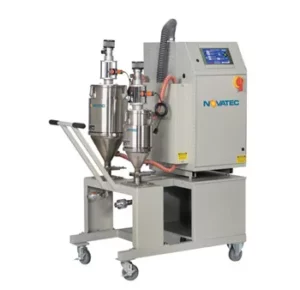
Portable dry/convey units make sense for occasional drying, while central drying and conveying tends to fit plants with dryers on 10 or more machines, frequent material changes, or one material needed at several machines. Portable units combine dryer, hopper, receiver and pump on a caster frame, but are impractical above about 200 lb/hr because they become too large to move.
The use of Portable Dry/Convey units has to be weighed against Central Drying/Conveying to see which option is best for any given processor.
The concept of a drying system that can move from machine to machine actually developed with the processors themselves who modified equipment into portable devices.
Portable drying machines enable processors to:
Install other auxiliaries on their machines
Eliminate tall, potentially unsafe drying hoppers on machine throats
Pre-heat material elsewhere, prior to actual processing at the machine
Rapidly remove drying equipment from the machine for cleanout and material change
Do cleaning and maintenance in other, better suited, locations
Use drying equipment to be only when necessary, and to remove it at other times
All of these reasons make a great deal of sense if you are only doing occasional drying.
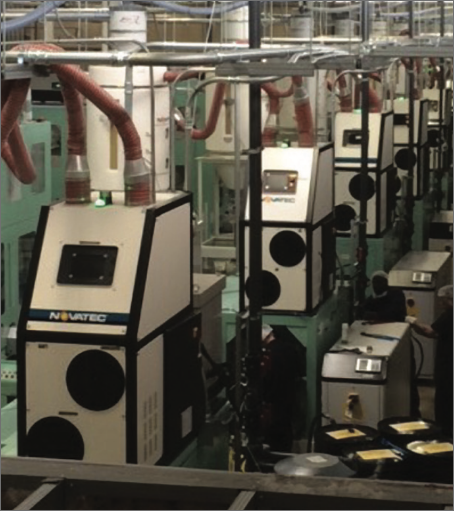
Central drying/conveying is the most efficient way to get materials to your machines if:
You have dryers on 10 or more machines
You have a single material that requires drying and it is required at multiple machines
You have frequent material changes on your machines
You use more material types than you have machines
You have dryer to dryer quality issues when drying the same material
You want to expand, but do not have sufficient space
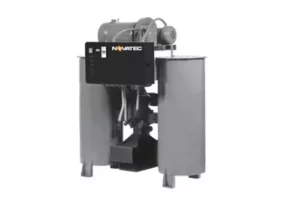
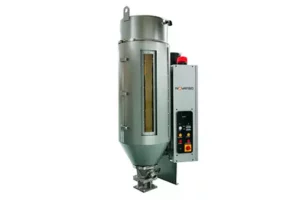
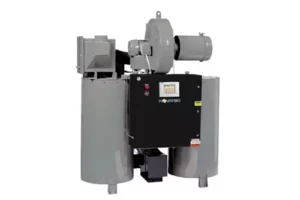
Types of dryers available in portable models include:
Desiccant Wheel Dryers
Dual Bed Desiccant Dryers
Compressed Air/Membrane dryers
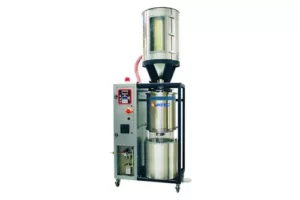
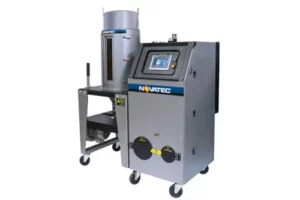
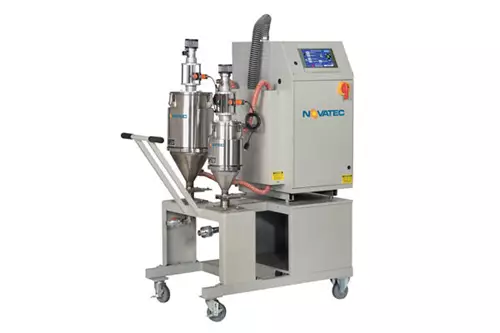
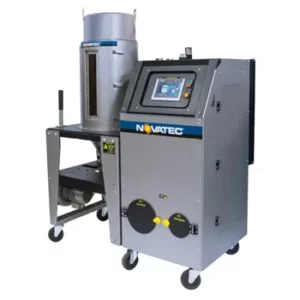
These models include the Dryer, Drying Hopper with a Vacuum Receiver a Vacuum Pump, all mounted on a frame with casters. A Machine-Mounted Vacuum Loader or Receiver is also supplied to be mounted on the process machine throat. It is not practical to use them for throughputs above about 200 lb./hr. because the unit would simply be too large to push around the plant floor.
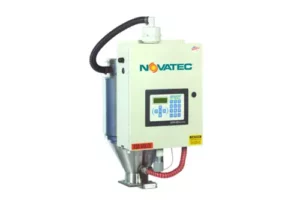
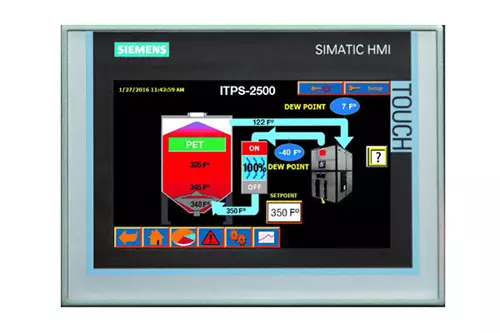
Controls have to be designed for both drying and conveying functions. Some microprocessor controls use various codes to describe errors and function buttons for programming parameters. There are also touch screen controls with intuitive icons and keypads for programming functions. With touch screen controls, errors are clearly spelled out in easily understood text messages. There are even controls that include features like over-drying protection for moisture-sensitive resins like nylons and photo-enhanced maintenance and trouble-shooting guides.
Some manufacturers charge extra for things like a warning light or a dew point analyzer, while others include those as standard.
Dual Bed (also called Twin Tower) dryers used to be the most commonly purchased type of resin dryer. A look at why, and where the technology has progressed.
Resin drying machines that can be moved from machine to machine within a plastics processing plant have advantages and disadvantages over a central drying system.
Learn about the keys to drying PET efficiently while saving space and energy.
Frequently Asked Questions
What are the advantages of a portable resin dryer?
Portable drying units free the machine throat for other auxiliaries, take tall drying hoppers off the machine, and let you pre-heat material away from the press. They can be pulled away quickly for cleanout and material changes, serviced in a better location, and used only when drying is actually needed.
What types of dryers come in portable models?
Portable models are available as desiccant wheel dryers, dual bed desiccant dryers, and compressed air dryers. A typical unit mounts the dryer, drying hopper, vacuum receiver and vacuum pump on a frame with casters, and comes with a machine-mounted loader or receiver for the process machine throat.
What controls should a portable dryer have?
Portable units need controls that handle both drying and conveying. Some use microprocessor controls with error codes and function buttons, while touch screen controls spell out errors in plain text. Some controls add over-drying protection for moisture-sensitive resins such as nylons, plus photo-enhanced maintenance and troubleshooting guides.
Vice President of Moisture & Drying Technologies, Novatec
Mark Haynie has designed and installed resin drying systems for more than 40 years, working in thousands of plastics plants across the industry. As Novatec’s Vice President of Moisture & Drying Technologies, he leads the company’s drying technology group, including its work on moisture measurement and predictive drying. He also serves as a technical reviewer for Novatec’s Drying Knowledge Center and has authored numerous technical articles and whitepapers on resin drying and moisture. Mark earned a Bachelor of Science in Chemical Engineering from Virginia Tech. Through Novatec’s Ask the Expert program, Mark regularly helps processors troubleshoot drying performance and resin-moisture challenges.
Joshua Belisle is Technology Manager at Novatec, where his work focuses on simulation and technology development for resin drying. He earned a B.S. in Mechanical Engineering with a minor in Engineering Business from the University of Virginia in 2023 and joined Novatec that same year. Joshua uses simulation tools to investigate previously difficult-to-measure aspects of the drying process, helping Novatec better understand airflow, heat transfer and other variables that influence resin-drying performance.
Mark Haynie, Vice President, Moisture & Drying, Novatec, Inc.
Author Profile:
Mark Haynie has designed and installed resin drying systems for more than 40 years, working in thousands of plastics plants across the industry. As Novatec’s Vice President of Moisture & Drying Technologies, he leads the company’s drying technology group, including its work on moisture measurement and predictive drying. He also serves as a technical reviewer for Novatec’s Drying Knowledge Center and has authored numerous technical articles and whitepapers on resin drying and moisture.
Mark earned a Bachelor of Science in Chemical Engineering from Virginia Tech. Through Novatec’s Ask the Expert program, Mark regularly helps processors troubleshoot drying performance and resin-moisture challenges.