

Desiccant Wheel/Rotor Dryers
By Mark Haynie and Joshua Belisle · Edited by Dana Gardner
Published August 9, 2024 · Reviewed by Mark Haynie · July 16, 2026
Summary
How does a desiccant wheel resin dryer work?
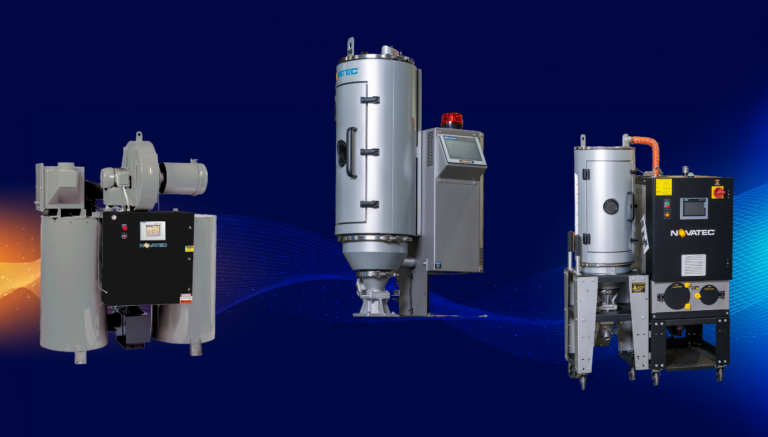
A desiccant wheel dryer uses a rotating wheel of molecular sieve desiccant grown onto a substrate. Stationary seals split the wheel into drying, regeneration, and cooling sections. Moist return air from the hopper passes through the drying section, where moisture is adsorbed; the dry air is heated and sent back to the resin. Ambient air heated to 400°F drives moisture out of the regeneration section.
This is not your father’s type of desiccant dryer! Desiccant wheel dryers are far more efficient, more compact, and require less maintenance than any previous dual bed desiccant dryer.
If you are familiar with old technology dual bed/twin tower or ‘carousel’ dryers, you think of desiccant as a large volume of B-B-sized round beads that are composed of about 30% clay.
Desiccant wheel dryers are entirely different in that the desiccant is pure molecular sieve desiccant that is literally grown onto a synthetic substrate, which is rolled into a round shape and encased in stainless steel.
What is a Desiccant Wheel Resin Dryer?
A desiccant wheel resin dryer is a type of dryer used to remove moisture from plastic resin. It uses a desiccant wheel, which is a rotating drum that contains a desiccant material, such as silica gel or molecular sieves, to dry the resin.
The operation of a desiccant wheel resin dryer involves passing the moist air through the desiccant wheel, which absorbs the moisture. The dry air is then passed over the resin, drying it to the desired level. The desiccant wheel rotates continuously to ensure that the desiccant material is evenly distributed and the drying process is efficient.
One of the advantages of a desiccant wheel resin dryer is that it can operate at a low temperature, which is important for preventing thermal degradation of the resin. Additionally, it is capable of removing moisture from the air even at high humidity levels, making it suitable for use in humid environments.
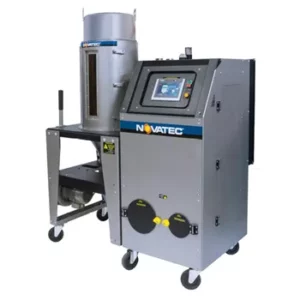
Advantages of Desiccant Wheel Dryers:
- Lower energy usage
- Less surface area of metal to heat
- Compact pure crystaline desiccant
- Up to 75% less footprint
- No spikes or deviations in temperature or dew point because there is no “Bed-Changing”
- Less maintenance

How a Desiccant Wheel Dryer Works
As the desiccant wheel rotates, stationary seals divide it into 3 distinct sections: Drying, Regeneration and Cooling. This continuous process ensures that dry desiccant is always available, therefore:
- Efficiency increases
- Power consumption decreases
- -40° dew point is guaranteed
Drying Section – A process blower pulls saturated air from the hopper and through a process filter and cooling coil. Process air is forced through the drying section of the desiccant wheel where the moisture is adsorbed. The desiccated air is then heated to the required temperature for drying and circulated back through the resin hopper.
Cooling Section – The desiccant is prepared to adsorb moisture when it rotates to the drying section.
Regeneration Section – Ambient, filtered air is heated to 400° F and forced through the regeneration section removing the moisture that was adsorbed by the desiccant.
Controls – Manufacturers have different controls for their wheel dryers. Some use microprocessor controls. Some use color touch screens that are not PLC’s. These controls often use complicated “look-up” codes to identify errors or to convey other information. Others use advanced high resolution color touch screen PLC controls with clear written messages to explain errors or as reminders of maintenance operations that are due.
Types of Resin Drying Systems
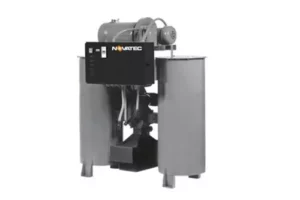
Silo Dehumidification/ Hot Air Dryers
What is a silo dehumidifier and how does it work and compare with other resin drying systems?
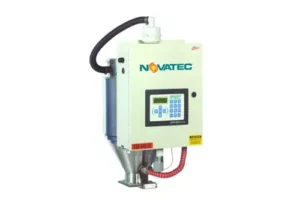
The principle of compressing air in factories for power tools and other high-pressure uses has a side benefit for the world of resin drying.
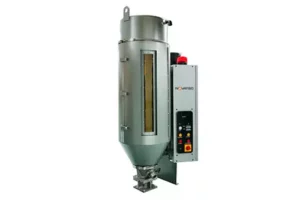
What is a membrane resin dryer and how does it compare to a compressed air dryer without a membrane?
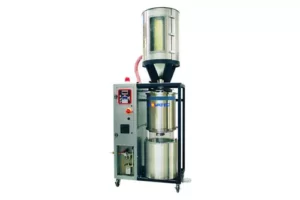
What is a vacuum resin dryer and how does it draw moisture away from plastic pellets in vacuum processing?
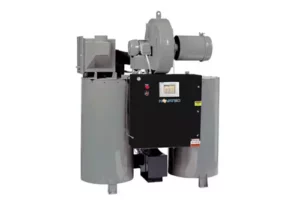
Dual Bed (also called Twin Tower) dryers used to be the most commonly purchased type of resin dryer. A look at why, and where the technology has progressed.
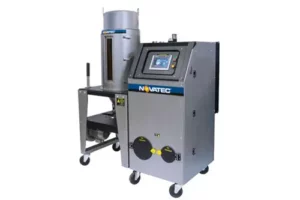
The advantages of desiccant wheel dryers include operating at a low temperature, which is important for preventing thermal degradation of the resin.
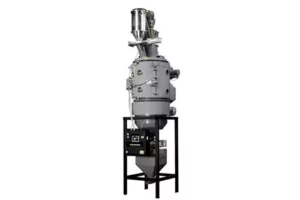
Technically, crystallizers are not dryers. They are used to convert PET from an amorphous, back to a crystalline state for re-processing.
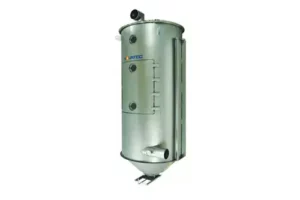
Drying Hoppers for Plastic Resins
Drying hoppers are part of most drying systems. At a glance, they look much the same, but there are certain features you should look for.
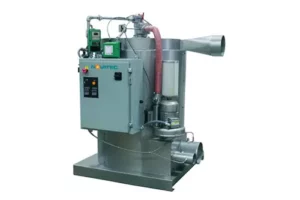
What are the benefits of gas-fired process heaters for drying plastic resins?
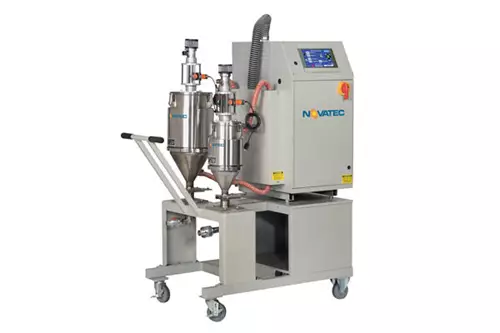
Resin drying machines that can be moved from machine to machine within a plastics processing plant have advantages and disadvantages over a central drying system.
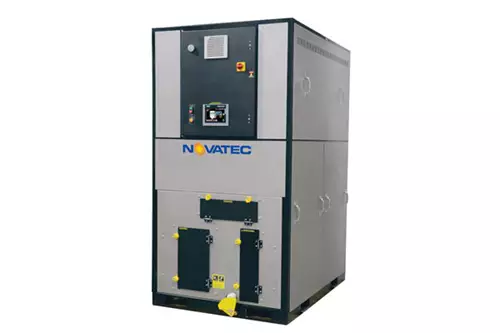
Properly designed Central Drying Assemblies are easily connected together to save installation costs.

PET Energy-Saving Drying Systems
Learn about the keys to drying PET efficiently while saving space and energy.
Frequently Asked Questions
What are the advantages of a desiccant wheel dryer over a dual bed dryer?
Cited advantages are lower energy use, less metal surface to heat, a compact pure crystalline desiccant, up to 75% less footprint, less maintenance, and no temperature or dew point spikes because there is no bed changeover. Because the wheel rotates continuously through drying, regeneration, and cooling, dry desiccant is continuously available in the process stream, which raises efficiency and lowers power consumption.
What is the desiccant in a wheel dryer made of?
Pure molecular sieve desiccant that is grown onto a synthetic substrate, rolled into a round shape, and encased in stainless steel. That differs from dual bed and carousel dryers, which hold a large volume of BB-sized beads made of about 30% clay. The compact bonded desiccant is one reason the dryer needs less maintenance and a smaller footprint.
What happens in the regeneration and cooling sections of a desiccant wheel?
In the regeneration section, filtered ambient air is heated to 400°F and forced through the wheel to strip out the moisture the desiccant adsorbed in the drying section. The wheel then turns into the cooling section, where the desiccant is brought back to a condition ready to adsorb moisture again before it rotates into the process air stream. The cycle repeats continuously, so drying is not interrupted.
About the Authors

Vice President of Moisture & Drying Technologies, Novatec
Mark Haynie has designed and installed resin drying systems for more than 40 years, working in thousands of plastics plants across the industry. As Novatec’s Vice President of Moisture & Drying Technologies, he leads the company’s drying technology group, including its work on moisture measurement and predictive drying. He also serves as a technical reviewer for Novatec’s Drying Knowledge Center and has authored numerous technical articles and whitepapers on resin drying and moisture.
Mark earned a Bachelor of Science in Chemical Engineering from Virginia Tech.
Through Novatec’s Ask the Expert program, Mark regularly helps processors troubleshoot drying performance and resin-moisture challenges.

Technology Manager, Novatec
Joshua Belisle is Technology Manager at Novatec, where his work focuses on simulation and technology development for resin drying. He earned a B.S. in Mechanical Engineering with a minor in Engineering Business from the University of Virginia in 2023 and joined Novatec that same year. Joshua uses simulation tools to investigate previously difficult-to-measure aspects of the drying process, helping Novatec better understand airflow, heat transfer and other variables that influence resin-drying performance.
Related Articles
Compare bead, wheel, and cartridge dryer technologies by throughput and maintenance requirements.

Review heater, airflow, filter, and desiccant maintenance to keep resin drying equipment working properly.

Learn how dew point monitoring, desiccant condition, and clean filters affect resin drying performance.
Ask the Plastic Drying Expert

Author Profile:
Mark Haynie has designed and installed resin drying systems for more than 40 years, working in thousands of plastics plants across the industry. As Novatec’s Vice President of Moisture & Drying Technologies, he leads the company’s drying technology group, including its work on moisture measurement and predictive drying. He also serves as a technical reviewer for Novatec’s Drying Knowledge Center and has authored numerous technical articles and whitepapers on resin drying and moisture.
Mark earned a Bachelor of Science in Chemical Engineering from Virginia Tech.
Through Novatec’s Ask the Expert program, Mark regularly helps processors troubleshoot drying performance and resin-moisture challenges.