By Greg Washburn and Joshua Belisle · Edited by Dana Gardner
Published August 6, 2024 · Reviewed by Greg Washburn · June 29, 2026
Summary
What does an outdated central conveying system cost a plant?
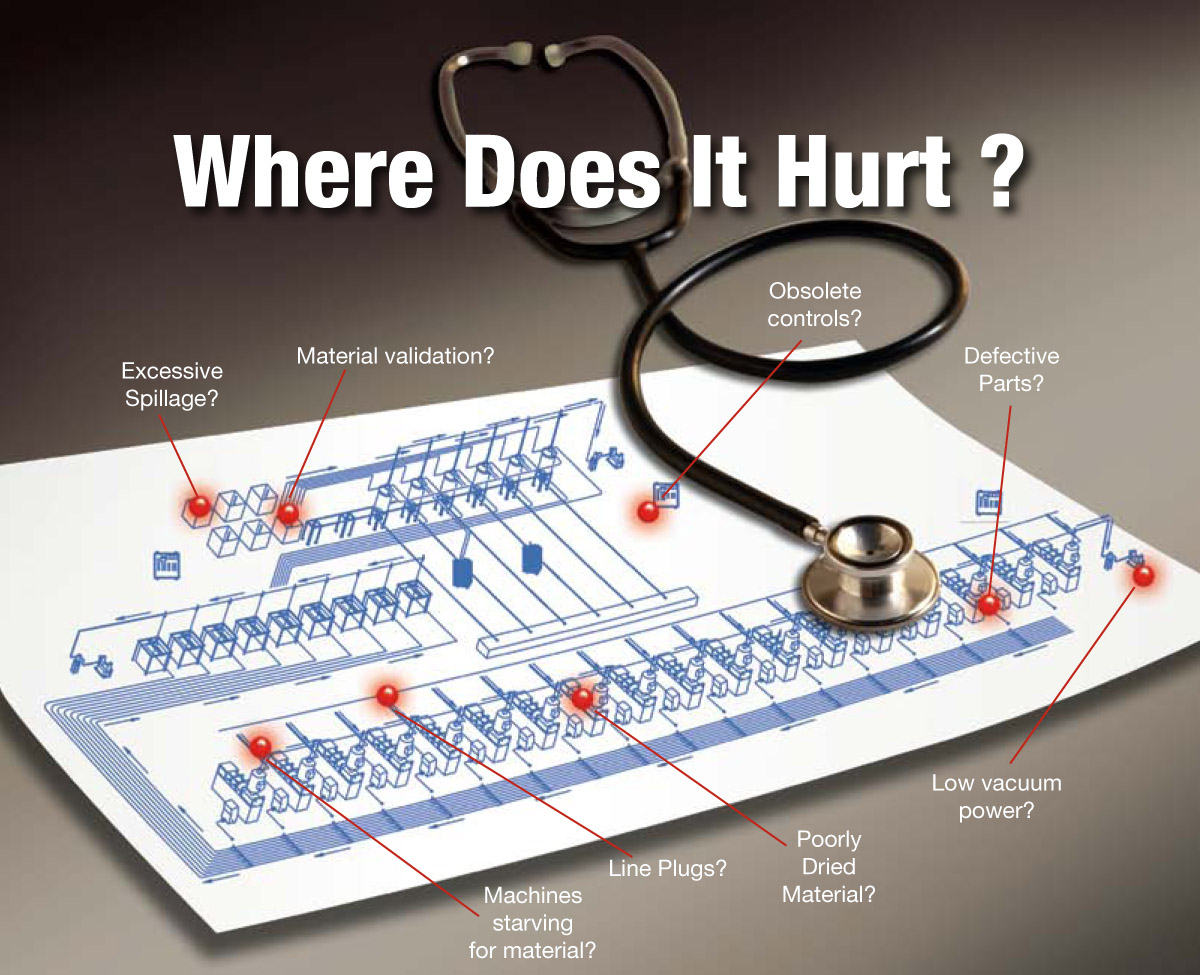
An outdated central system costs production time, labor and part quality. Plugged lines, machines starving for material, long hopper cleanouts, undersized pumps, poor drying and obsolete or mismatched controls lead to downtime, rejected parts and extra maintenance. Limited pump, dryer and control capacity also blocks expansion. A review of plant conditions is needed to find where the losses are and which fixes apply.
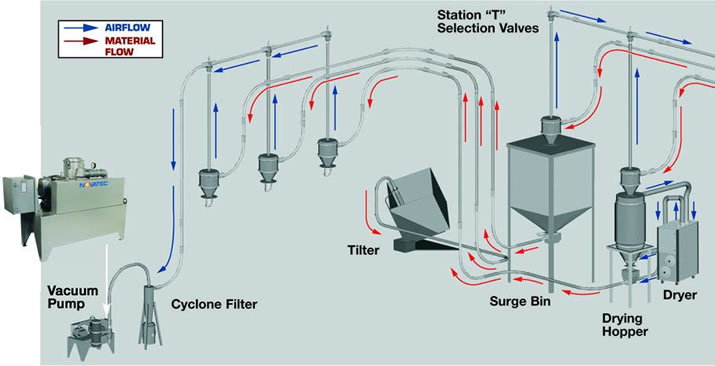
Older central systems have to be reviewed for inefficiencies that may be driving up production costs. Once again, tens of thousands – even hundreds of thousands of dollars are being wasted in plants that have outgrown their old resin handling system. Processing requirements may have changed or controls have become obsolete. Expansion or plant consolidation is hindered by low capacity pumps and maintenance costs are expanding.

PROBLEMS = LOST PRODUCTION TIME, LOST PROFITS AND LOST CUSTOMERS!
Costs Associated With Older Central Systems:
- Plugged Lines
– Lost production time & additional labor to find and clear lines - Machines starving for material
– Lost production time – rejected parts - Lengthy hopper cleanout times
– Increased labor – lost production - Not enough pump capacity
– Lost production time – rejected parts - Poor drying of material
– Rejected parts – lost customers - Components mismatched with controls
– Equipment offline – lost production - Obsolete controls – repair parts unavailable
– Equipment offline – lost production - Not enough dryer capacity
– Rejected parts – can’t add production - Not enough pump capacity
– Can’t extend production lines - Not enough control capacity
– Can’t add needed receivers and production capacity - High Maintenance of Pumps, Receivers and Controls
– Increased maintenance and downtime costs - Blender problems
– Increases material costs and decreases product quality
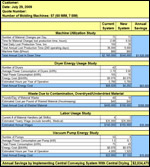
Usually, the cost to install or upgrade an efficient resin handling system is recovered in a matter of months – not years – See example of central system payback (Investment payback in Months – Not Years) but a review of conditions in your plant is required to identify areas of loss and possible remedies.
Go to: www.novatec.com/review to register for either a free consultation or a complete plant survey.

Frequently Asked Questions
What are signs a central conveying system is outdated?
Common signs include plugged lines that take labor to find and clear, machines starving for material, lengthy hopper cleanouts, not enough pump capacity, poor drying and rising maintenance on pumps, receivers and controls. Changed processing requirements, obsolete controls and low-capacity pumps that hinder expansion or plant consolidation also point to a system the plant has outgrown.
How do obsolete conveying controls affect production?
When controls are obsolete and repair parts are unavailable, or components are mismatched with the controls, equipment goes offline and production is lost. Controls without enough capacity also prevent the plant from adding the receivers it needs, which limits how much production capacity can be added to the existing system.
How long does a conveying system upgrade take to pay back?
The article states that the cost to install or upgrade an efficient resin handling system is usually recovered in months rather than years. Payback depends on the losses in a specific plant, so a review of conditions is needed first to identify where time, material and labor are being lost and which remedies apply.
About the Authors
Vice President of Operations, Novatec
Greg Washburn is Vice President of Operations at Novatec and has been with the company for more than three decades. He is involved in all phases of engineering design and product manufacturing, giving him a broad perspective on how resin drying and conveying equipment moves from engineering concept through production and into real-world processing environments. Greg holds a B.S. in Mechanical Engineering from the University of Maryland, Baltimore County (UMBC) and an MBA from Loyola University Maryland. His experience spans engineering, manufacturing and operations across Novatec’s material-handling technologies.
Technology Manager, Novatec
Joshua Belisle is Technology Manager at Novatec, where his work focuses on simulation and technology development for resin drying. He earned a B.S. in Mechanical Engineering with a minor in Engineering Business from the University of Virginia in 2023 and joined Novatec that same year. Joshua uses simulation tools to investigate previously difficult-to-measure aspects of the drying process, helping Novatec better understand airflow, heat transfer and other variables that influence resin-drying performance.
Related Articles
Estimate the return on a central conveying investment using plant savings and the ROI worksheet.
Explore a dedicated line design that separates materials and supports multiple processing machines.
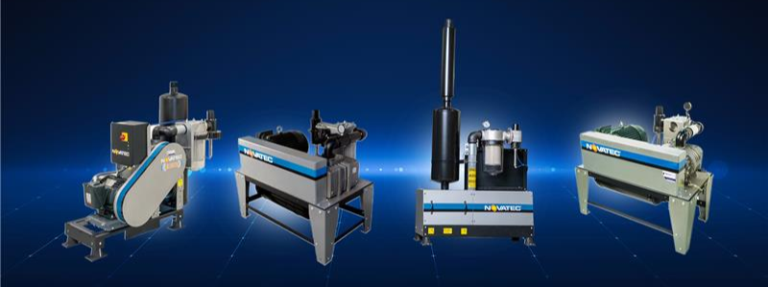
Compare vacuum pump technologies, capacity and operating costs when upgrading a conveying system.
Ask the Expert