What features do modern plastic resin vacuum loaders have?
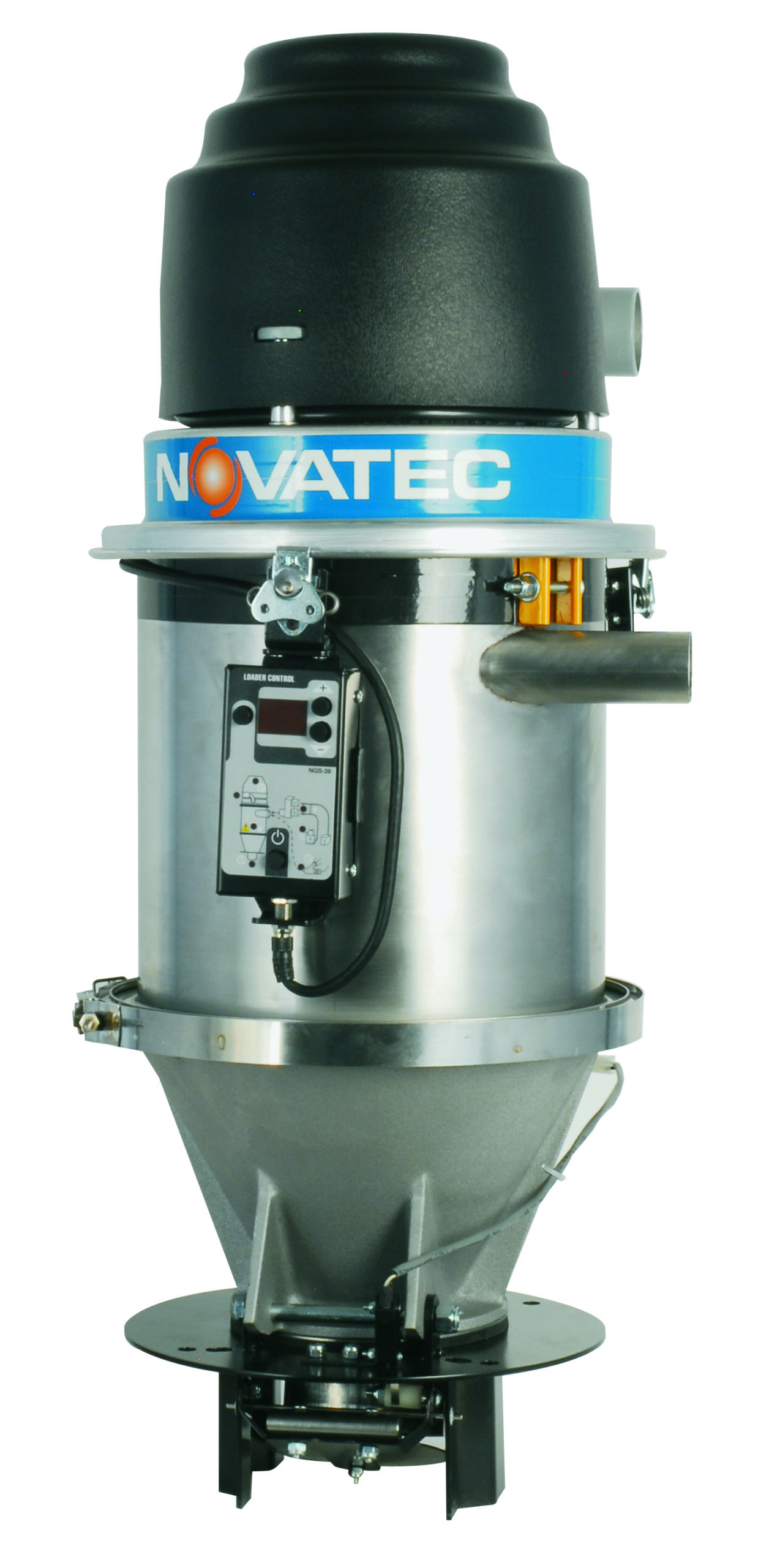
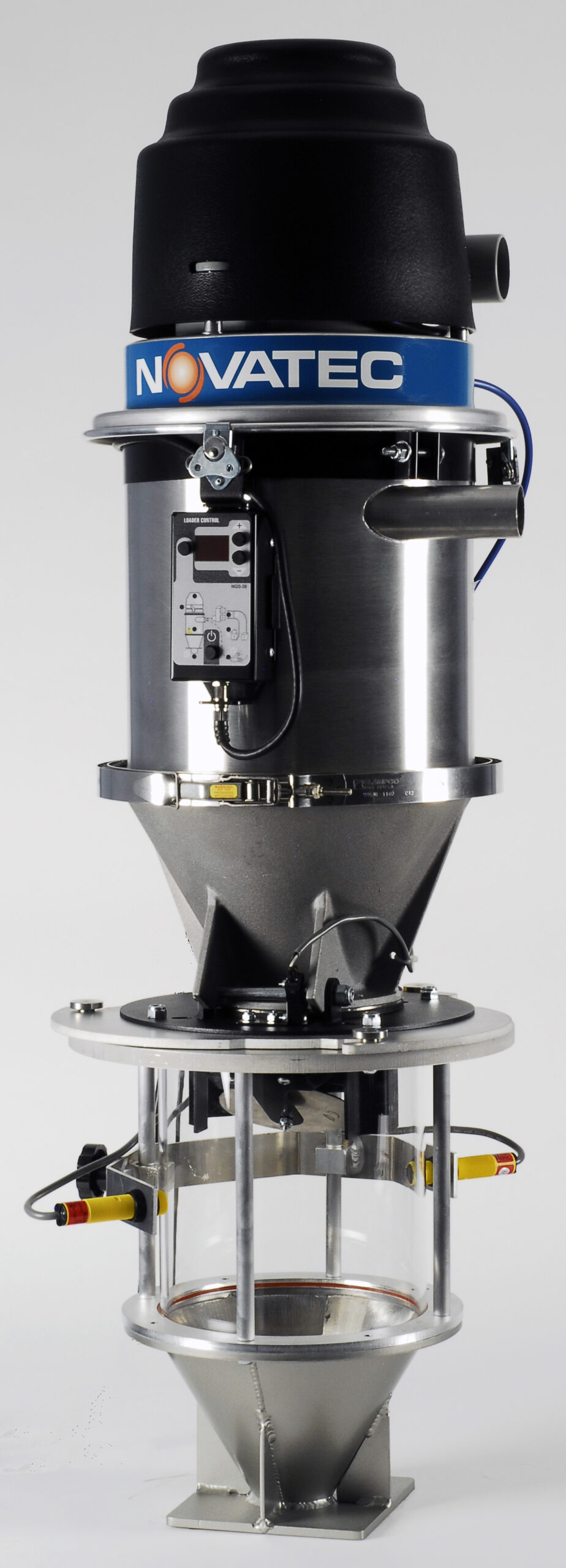
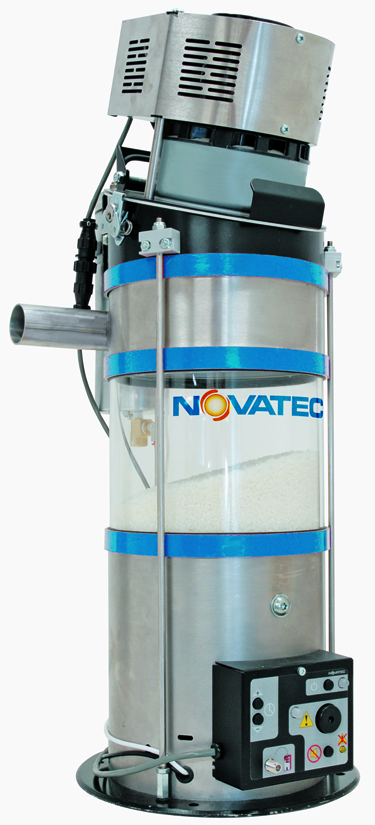
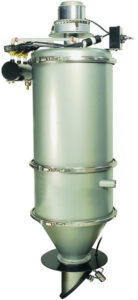
Modern vacuum loaders add features that make them easier to operate and service. Designs include slanted lids for access, clear glass center sections for viewing operation, and flat bottoms that don’t protrude into the container below. Some tilt from the top and bottom for hands-free filter access and cleaning, some have rotating modular sections for easier line hook-up, and some use a pendant control to program multiple loaders.
More recent loader designs have features like slanted lids for easy access, clear glass center sections, so operation can be viewed, and flat bottoms that do not protrude down into the container on which they are mounted.
Other models tilt from the bottom and top for hands-free access to the filter and for cleaning.
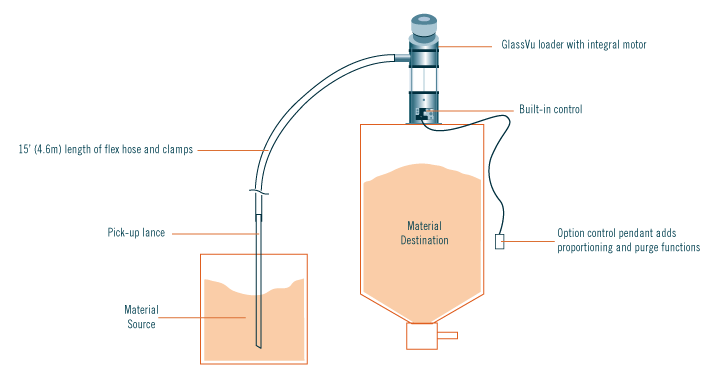
Additionally, they may have modular sections that can be rotated to allow easier hook-up of vacuum and material lines. Some even have a loader control on a pendant that can be used to program multiple loaders.
Why do some vacuum loaders have a clear glass section?
A clear glass center section lets operators watch the loader operate. Paired with a slanted lid for easy access and a flat bottom that doesn’t protrude down into the container the loader sits on, it is one of the features that separates more recent loader designs from older ones.
What makes newer vacuum loaders easier to maintain and install?
Some newer loaders tilt open from both the top and the bottom, which gives hands-free access to the filter and for cleaning. Other designs use modular sections that rotate so vacuum and material lines are easier to hook up, and some add a pendant-mounted control that can program multiple loaders.
Greg Washburn is Vice President of Operations at Novatec and has been with the company for more than three decades. He is involved in all phases of engineering design and product manufacturing, giving him a broad perspective on how resin drying and conveying equipment moves from engineering concept through production and into real-world processing environments. Greg holds a B.S. in Mechanical Engineering from the University of Maryland, Baltimore County (UMBC) and an MBA from Loyola University Maryland. His experience spans engineering, manufacturing and operations across Novatec’s material-handling technologies.
Joshua Belisle is Technology Manager at Novatec, where his work focuses on simulation and technology development for resin drying. He earned a B.S. in Mechanical Engineering with a minor in Engineering Business from the University of Virginia in 2023 and joined Novatec that same year. Joshua uses simulation tools to investigate previously difficult-to-measure aspects of the drying process, helping Novatec better understand airflow, heat transfer and other variables that influence resin-drying performance.