What does a station valve do in a central conveying system?
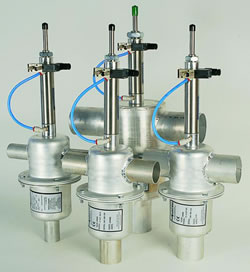
A station valve is an air-actuated valve that controls the flow of vacuum at each receiver in a central conveying system, and each receiver needs one. It is usually aluminum, with inlet and outlet tubes sized to match the vacuum line, and it mounts on the vacuum line above or behind the receiver or is built into the receiver itself.
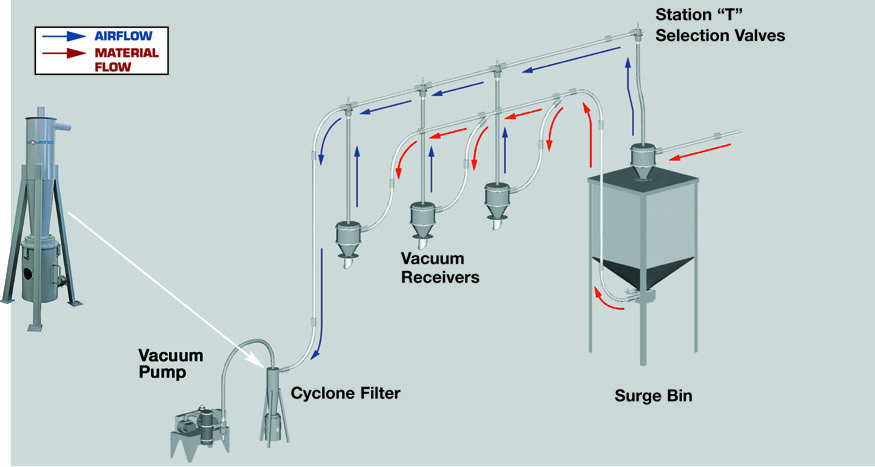
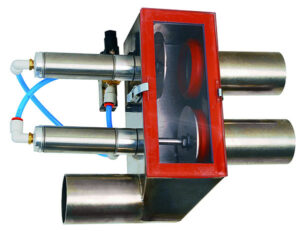
This component may be called a station valve, a station ‘T’ or a vacuum sequencing valve. In all cases, it is an air-actuated valve that controls the flow of vacuum at each station receiver. A station valve is required for every receiver in a central system. They are usually made of aluminum and their inlet/outlet tubes are sized to match the diameter of the vacuum line.
Station valves are attached to the vacuum line associated with each receiver. They can be mounted over top or even behind the receivers. They often include a pop-up indicator, which is a visual indication of whether the station is working properly or not.
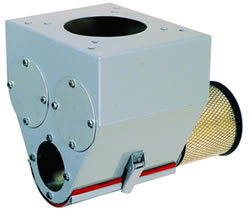
They may also be built into or on top of each receiver. The built-in station valves make receiver installation easier but they do add to the bulk and weight of the receivers.
Where are station valves mounted on a vacuum conveying system?
Station valves attach to the vacuum line associated with each receiver. They can be mounted over the top of the receivers or even behind them, or built into or on top of each receiver. Many include a pop-up indicator that gives a visual indication of whether the station is working properly.
Should I choose receivers with built-in station valves?
Station valves built into or on top of each receiver make receiver installation easier, because the valve arrives as part of the receiver. The tradeoff is that built-in valves add to the bulk and weight of the receivers. Separately mounted valves attach to the vacuum line over or behind the receiver instead.
What is a vacuum sequencing valve?
Vacuum sequencing valve is another name for a station valve. Whatever it is called, it is an air-actuated valve that controls the flow of vacuum to each station receiver in a central system. It is usually made of aluminum, with inlet and outlet tubes sized to the diameter of the vacuum line.
Greg Washburn is Vice President of Operations at Novatec and has been with the company for more than three decades. He is involved in all phases of engineering design and product manufacturing, giving him a broad perspective on how resin drying and conveying equipment moves from engineering concept through production and into real-world processing environments. Greg holds a B.S. in Mechanical Engineering from the University of Maryland, Baltimore County (UMBC) and an MBA from Loyola University Maryland. His experience spans engineering, manufacturing and operations across Novatec’s material-handling technologies.
Joshua Belisle is Technology Manager at Novatec, where his work focuses on simulation and technology development for resin drying. He earned a B.S. in Mechanical Engineering with a minor in Engineering Business from the University of Virginia in 2023 and joined Novatec that same year. Joshua uses simulation tools to investigate previously difficult-to-measure aspects of the drying process, helping Novatec better understand airflow, heat transfer and other variables that influence resin-drying performance.