

By Greg Washburn and Joshua Belisle · Edited by Dana Gardner
Published August 3, 2024 · Reviewed by Greg Washburn · August 24, 2026
Summary
What features should I look for in a vacuum receiver?
Choose a vacuum receiver by the required flow rate and by the type and bulk density of the material. Larger receivers reduce fill cycles and wear on pumps and valves. Look for a tangential inlet with flapper and gasket, a fast-discharging valve, leak-tight neoprene seals, no-tools access for cleanout, and a match to the system’s line size, pump and controller voltage.
- Receiver selection is determined by the flow rate required and the type and bulk density of the material transferred.
- Large receivers are better than small ones; their increased capacity reduces the number of fill-cycle times, which reduces the wear and tear on pumps and valves. Also, large receivers are better suited for the increased capacity of today’s vacuum pumps.
- Powder receivers are used for powders (such as PVC) and dusty regrind. These receivers include special filters and blowback systems to avoid clogging and to maintain energy efficiency.
- Filterless receivers do not require filter cleaning nor filter replacement and Blowback is not required.
- Machine-mount (JIT) receivers are used on process machines. They are usually equipped with height-adjustable photoelectric level sensors.
- Stainless steel is the most durable material for most applications.
- Receivers for operations with abrasive materials require custom options, such as thick-walled wear plates, electro-less nickel plating, and interior ceramic coatings.
(See Delay Abrasive Wear As Long As Possible)
- Receivers having a tangential inlet with flapper and gasket exhibit minimal material degradation while also eliminating the damaging effects of direct impact on receiver bodies.
- The discharge valve should allow material to exit the receiver quickly. Larger-diameter discharge outlets are preferred for regrinds or difficult-to-flow materials.
- Receiver and related connections must be air and leak-tight. Neoprene seals on a dump throat ensure against vacuum loss.
- “No-tools access” in receivers makes cleanout and other maintenance easy and fast.
Receivers are designed to operate within the specifications of the conveying system.
That means the receiver must be matched to the line size of the conveying system (tubing diameter and vacuum pump), controller voltage and both the throughput (capacity) and conveying distance. A system may have many vacuum receivers. The limiting factor is the amount of vacuum which – is provided by one or more central vacuum pumps.
Frequently Asked Questions
Are larger vacuum receivers better than small ones?
Generally, yes. Larger receivers hold more material per cycle, which reduces the number of fill cycles and with it the wear and tear on pumps and valves. They are also better suited to the higher capacity of today’s vacuum pumps. Receiver size still has to match the system’s throughput, line size and conveying distance.
What receiver do I need for powder or dusty regrind?
Powders such as PVC and dusty regrind call for powder receivers. These include special filters and blowback systems that keep the filters from clogging and maintain energy efficiency. Regrind and other difficult-to-flow materials also benefit from a larger-diameter discharge outlet, so material exits the receiver quickly.
How do I protect vacuum receivers from abrasive materials?
Receivers handling abrasive materials need custom options such as thick-walled wear plates, electroless nickel plating and interior ceramic coatings. A tangential inlet with a flapper and gasket also helps, because it avoids material striking the receiver body directly and keeps material degradation low. Stainless steel is the most durable body material for most applications.
About the Authors

Vice President of Operations, Novatec
Greg Washburn is Vice President of Operations at Novatec and has been with the company for more than three decades. He is involved in all phases of engineering design and product manufacturing, giving him a broad perspective on how resin drying and conveying equipment moves from engineering concept through production and into real-world processing environments. Greg holds a B.S. in Mechanical Engineering from the University of Maryland, Baltimore County (UMBC) and an MBA from Loyola University Maryland. His experience spans engineering, manufacturing and operations across Novatec’s material-handling technologies.

Technology Manager, Novatec
Joshua Belisle is Technology Manager at Novatec, where his work focuses on simulation and technology development for resin drying. He earned a B.S. in Mechanical Engineering with a minor in Engineering Business from the University of Virginia in 2023 and joined Novatec that same year. Joshua uses simulation tools to investigate previously difficult-to-measure aspects of the drying process, helping Novatec better understand airflow, heat transfer and other variables that influence resin-drying performance.
Related Articles

Review receiver sizing, components and selection for central resin conveying systems.
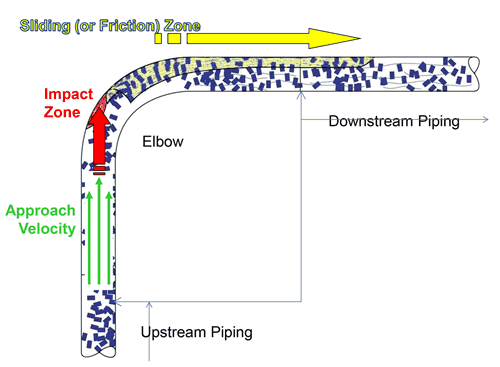
Explore ways to reduce conveying wear through bend selection, material choices and air velocity.
Compare vacuum pumps and match conveying capacity to your plant’s receivers and material requirements.
Ask the Expert
