




Learn from Top Conveying
Experts in this Unique Webinar!
By Greg Washburn and Joshua Belisle · Edited by Dana Gardner
Published August 5, 2024 · Reviewed by Greg Washburn · August 10, 2026
Summary
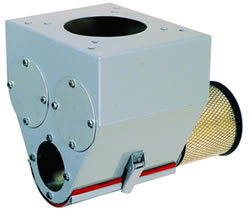
Purging conveying lines after each load is the recommended practice. A purge valve on the vacuum take-off box beneath a surge bin or drying hopper switches after dried material is conveyed to the process machine, pulling ambient or dry air through the line to clear buildup. This keeps lines from plugging and preserves material proportions when conveying from a blender.
Purging clears material out of conveying lines to keep them from plugging. A purge valve is connected to the vacuum take-off box beneath a surge bin or drying hopper so that after the dried material is conveyed to the process machine, the valve switches and either ambient or dry air is pulled through the material line to clear any buildup. This also preserves material proportions when conveying from a blender. The wise choice here is to purge lines of material before sending more material through the conveying line so material does not accumulate and block the line. Be sure that the control you choose is designed for purge.
A purge valve connects to the vacuum take-off box under a surge bin or drying hopper. Once the material has been conveyed to the process machine, the valve switches so that ambient or dry air is pulled through the material line instead of resin, sweeping out any material left in the line.
Purging preserves the material proportions when conveying from a blender. Material left in the line between loads does not accumulate, so what arrives at the process machine reflects the blend as it was made. The line is cleared before the next batch is sent through, which also keeps the line from blocking.
Yes. Be sure the conveying control you choose is designed for purge. The purge sequence means switching the valve after material is conveyed and pulling ambient or dry air through the line before the next load is sent, so the control has to be able to run that step on its own.
Greg Washburn is Vice President of Operations at Novatec and has been with the company for more than three decades. He is involved in all phases of engineering design and product manufacturing, giving him a broad perspective on how resin drying and conveying equipment moves from engineering concept through production and into real-world processing environments. Greg holds a B.S. in Mechanical Engineering from the University of Maryland, Baltimore County (UMBC) and an MBA from Loyola University Maryland. His experience spans engineering, manufacturing and operations across Novatec’s material-handling technologies.
Joshua Belisle is Technology Manager at Novatec, where his work focuses on simulation and technology development for resin drying. He earned a B.S. in Mechanical Engineering with a minor in Engineering Business from the University of Virginia in 2023 and joined Novatec that same year. Joshua uses simulation tools to investigate previously difficult-to-measure aspects of the drying process, helping Novatec better understand airflow, heat transfer and other variables that influence resin-drying performance.
Understand how vacuum take-off boxes introduce resin into conveying lines.
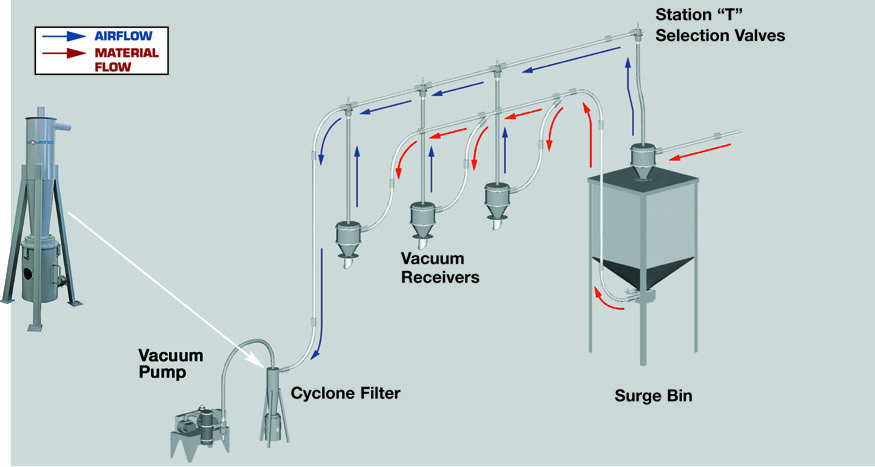
Review how a common-line conveying system distributes resin to multiple destinations.
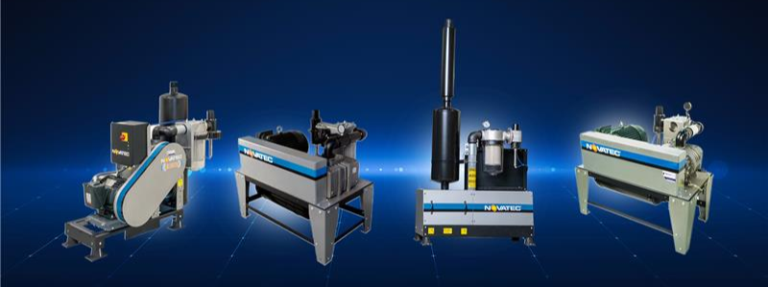
Compare vacuum pump types and the factors that guide selection for a plastics processing plant.