

By Greg Washburn and Joshua Belisle · Edited by Dana Gardner
Published August 3, 2024 · Reviewed by Greg Washburn · August 12, 2026
Summary
Why is my vacuum receiver not conveying material?
Poor or no conveying usually comes down to a valve that is not sealing or controls not reprogrammed after a change. Check that each sequencing valve closes when its receiver is not loading, that the discharge flapper swings shut freely, and that the inlet check valve is not held open by wear or a trapped pellet; a sequencing or check valve that leaks robs vacuum from the other receivers.
Poor or No Conveying
1. Sequencing Valve Operation
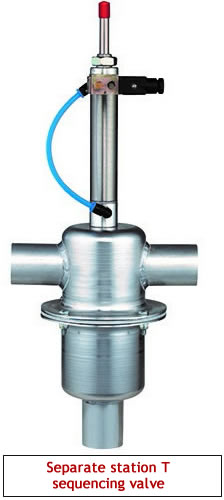
Vacuum “T” valves or a built-in sequencing valve isolates the vacuum conveying power of the pump to one receiver at a time for conveying. Each valve in the system must close off air flow when it is NOT in operation, allowing other receivers to receive full vacuum. One ‘stuck’ valve can ruin the vacuum supply for the entire system. Check that each valve operates in response to its receiver’s turn in the vacuum system. Each valve should open for loading and close when loading is complete. The extended shaft of the T valve’s cylinder is a good indication of valve operation. Where the valve is built into the receiver lid, the valve operation can viewed through the vent or there may be an indicator light.
2. Receiver Discharge Flapper Stuck Open
If the flapper valve is stuck open or does not fully close, conveying cannot take place. A problem receiver can be easily checked for proper, free movement of its flapper valve:
- If conveying is not triggered when the flapped is closed, there is an issue with the electrical demand switch.
- If the flapper does not swing nearly shut by its own weight, there is a pivot point (hinge) or counterweight issue.
- If the flapper is ‘stuck’ in the open position, there is a material contamination issue with the pivot point (hinge) of the valve.
3. Inlet Check Valve Stuck Open
Many receivers are equipped with swinging check valves on their material inlets. A check valve that is stuck open, either by hinge wear or a trapped pellet, will leak valuable vacuum air, decreasing vacuum capability at other receivers or even preventing conveying throughout the system.
Rule of thumb: On systems that convey material from one source to multiple receivers via a common material line; If only one receiver in the system conveys correctly, the problem is probably at THAT receiver.
4. Conveying Controls Not Properly (Re) Programmed
Central material conveying systems that include a network of pumps, receivers and material sources provide high efficiency and a multitude of flexibility. But often, new requirements are not completely programmed after material or system configuration changes. Items to check:
- Is the new material source further away than the previous source? More conveying time and/or purge time might be required to accommodate this difference in distance.
- Is the new material as free-flowing as the last material? Does the material have a tendency to clog the conveying lines, or simply convey slower due to weight or shape? Changes to load/purge times as well as material pick-up tube changes may be required.
- Has the receiver been assigned to the proper vacuum pump? The proper material valve?
- Has system piping and or wiring been modified to accommodate this new configuration for conveying?
5. Confirm Proper Vacuum Breaker Valve Operation on the Vacuum Pump
6. Check The Material Source
7. Feed Tube / Take-Away Box Air Settings
Frequently Asked Questions
How do I check if a vacuum receiver's sequencing valve is working?
Each vacuum T valve or built-in sequencing valve should open for loading and close when loading is complete, so the other receivers get full vacuum. Watch each valve respond to its receiver’s turn; on a T valve the extended cylinder shaft shows it has actuated, and on a lid-mounted valve you can see operation through the vent or an indicator light. One stuck valve can spoil vacuum system-wide.
Why won't my vacuum receiver convey when the flapper is stuck open?
If the discharge flapper is stuck open or does not fully close, conveying cannot take place. Check its movement: if the flapper is closed but loading is not triggered, the electrical demand switch is at fault; if it will not swing nearly shut under its own weight, look at the hinge or counterweight; if it is stuck open, material has contaminated the hinge.
What should I reprogram after changing material or source?
Check whether the new source is farther away, which may call for more conveying or purge time; whether the new material flows as freely as the last, since a slower or clog-prone material may need different load and purge times or a different pick-up tube; whether the receiver is assigned to the right vacuum pump and material valve; and whether piping or wiring was changed for the new configuration.
About the Authors

Vice President of Operations, Novatec
Greg Washburn is Vice President of Operations at Novatec and has been with the company for more than three decades. He is involved in all phases of engineering design and product manufacturing, giving him a broad perspective on how resin drying and conveying equipment moves from engineering concept through production and into real-world processing environments. Greg holds a B.S. in Mechanical Engineering from the University of Maryland, Baltimore County (UMBC) and an MBA from Loyola University Maryland. His experience spans engineering, manufacturing and operations across Novatec’s material-handling technologies.

Technology Manager, Novatec
Joshua Belisle is Technology Manager at Novatec, where his work focuses on simulation and technology development for resin drying. He earned a B.S. in Mechanical Engineering with a minor in Engineering Business from the University of Virginia in 2023 and joined Novatec that same year. Joshua uses simulation tools to investigate previously difficult-to-measure aspects of the drying process, helping Novatec better understand airflow, heat transfer and other variables that influence resin-drying performance.
Related Articles

Learn how vacuum receivers operate and how to choose and maintain them for a conveying system.
Review the role of vacuum receivers in transferring resin through a conveying system.
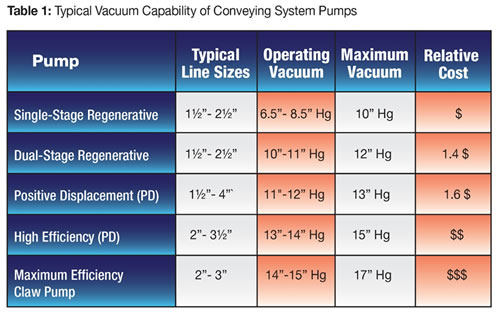
Understand maximum, operating, and free vacuum and how pump characteristics affect conveying performance.
Ask the Expert