By Greg Washburn and Joshua Belisle · Edited by Dana Gardner
Published August 8, 2024 · Reviewed by Greg Washburn · September 7, 2026
Summary
What does a drawer magnet do in plastics processing?
A drawer magnet collects tramp or ferrous metal particles from resin as it flows through the unit, protecting the process machine from screw damage and from plugged orifices in dies, molds or hot runners. It is typically placed under a surge bin or drying hopper, or directly over the machine throat, with the magnets on a removable plate for cleaning.
Drawer magnets are typically placed under a surge bin, drying hopper or directly over the machine throat so that as material flows through the unit, the magnets inside, collect any tramp or ferrous metal particles. This protects the process machine from screw damage or plugging of orifices in dies, molds or hot runners.
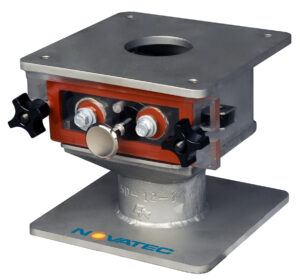
The powerful magnets are usually fastened to a removable polycarbonate plate that acts as a drawer so the magnets can be easily removed and cleaned (bottom right).
Features to look for:
- Slide Gate
— So material flow can be interrupted while the slide gate is cleaned - High Temperature Option
— Allows use with materials to 275F.

Frequently Asked Questions
Where should a drawer magnet be installed?
Drawer magnets are typically placed under a surge bin, under a drying hopper, or directly over the machine throat. As material flows through the unit, the magnets inside collect tramp or ferrous metal particles before they reach the process machine, where they could damage the screw or plug orifices in dies, molds or hot runners.
How do you clean a drawer magnet?
The magnets are usually fastened to a removable polycarbonate plate that works as a drawer, so they can be pulled out and cleaned easily. A slide gate is a feature worth looking for, because it lets material flow be interrupted while the magnets are pulled and cleaned.
Can drawer magnets be used with hot, dried resin?
Yes, with the right option. A high temperature option allows a drawer magnet to be used with materials up to 275°F. That matters for placements under a drying hopper or directly over the machine throat, where dried, heated resin flows through the unit on its way to the process.
About the Authors
Vice President of Operations, Novatec
Greg Washburn is Vice President of Operations at Novatec and has been with the company for more than three decades. He is involved in all phases of engineering design and product manufacturing, giving him a broad perspective on how resin drying and conveying equipment moves from engineering concept through production and into real-world processing environments. Greg holds a B.S. in Mechanical Engineering from the University of Maryland, Baltimore County (UMBC) and an MBA from Loyola University Maryland. His experience spans engineering, manufacturing and operations across Novatec’s material-handling technologies.
Technology Manager, Novatec
Joshua Belisle is Technology Manager at Novatec, where his work focuses on simulation and technology development for resin drying. He earned a B.S. in Mechanical Engineering with a minor in Engineering Business from the University of Virginia in 2023 and joined Novatec that same year. Joshua uses simulation tools to investigate previously difficult-to-measure aspects of the drying process, helping Novatec better understand airflow, heat transfer and other variables that influence resin-drying performance.
Related Articles
Compare electronic detection and automatic rejection of ferrous and non-ferrous metal in resin.
Compare receiver sizes, filtration and conveying connections for delivering resin to processing machines.
Review drying hopper sizing, insulation and maintenance access before resin feeds the processing machine.
Ask the Expert