What size conveying lines does a central resin system need?
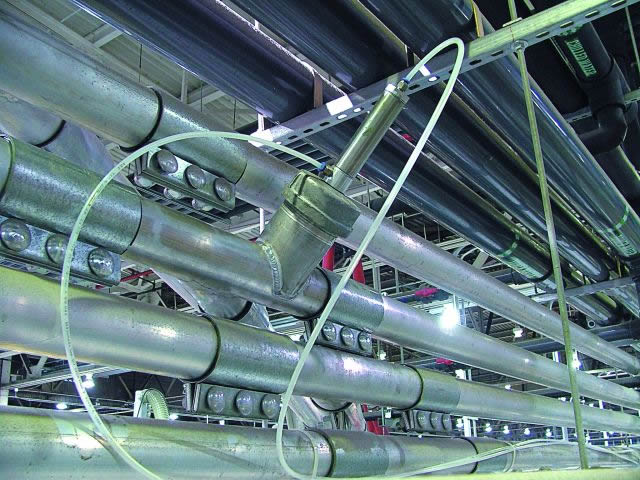
Conveying line sizes typically range from 1.5 to 4 inches, depending on the material, throughput, conveying distance, and pump type and size. The calculations affect both the initial cost and how well the system runs, so line sizing is best left to a systems engineer who can adjust the calculations based on years of experience.
Choosing line sizes for any system should be left to your systems engineer. They can range from 1.5 “to 4” depending on the material, the throughput, the conveying distance and the pump type and size. These calculations are critical to the initial cost and proper operation of your system and a good systems engineer can tweak the calculations based on years of experience to ensure a satisfactory outcome.
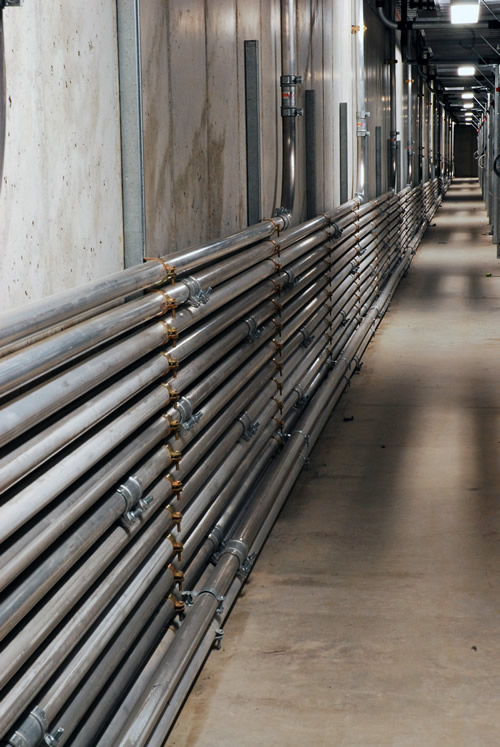
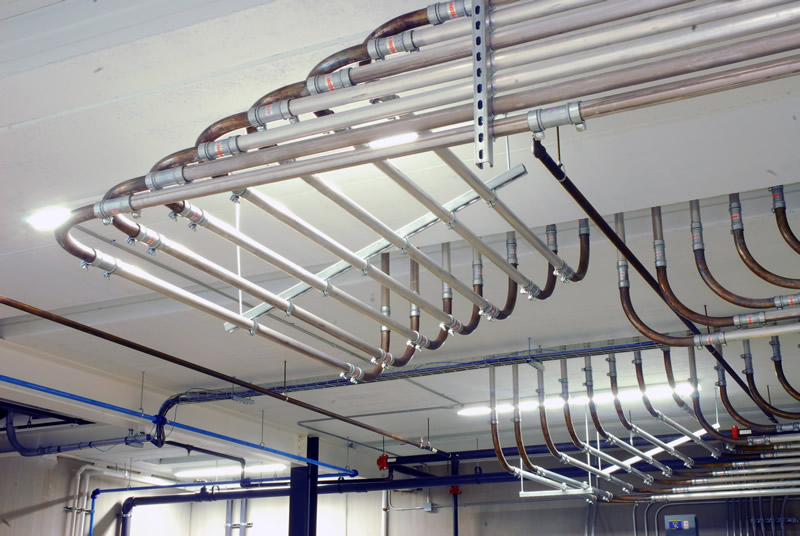
Material and vacuum lines may be overhead, underground or below a mezzanine. When material lines run underground or below a mezzanine, they can approach their destination by coming up through the floor, keeping the overhead area clear. The location of the lines is important and your systems engineer will have the vision and experience to give advice on which location best suits your needs.
Frequently Asked Questions
Can resin conveying lines run underground or through the floor?
Yes. Material and vacuum lines can run overhead, underground, or below a mezzanine. When material lines run underground or below a mezzanine, they can come up through the floor at their destination, which keeps the overhead area clear. A systems engineer can advise which location best suits your plant.
Who should calculate conveying line sizes?
Line sizing should be left to your systems engineer. The calculations depend on the material, throughput, conveying distance, and pump type and size, and they are critical to both the initial cost and proper operation of the system. An experienced engineer can refine the calculations based on years of experience.
Greg Washburn is Vice President of Operations at Novatec and has been with the company for more than three decades. He is involved in all phases of engineering design and product manufacturing, giving him a broad perspective on how resin drying and conveying equipment moves from engineering concept through production and into real-world processing environments. Greg holds a B.S. in Mechanical Engineering from the University of Maryland, Baltimore County (UMBC) and an MBA from Loyola University Maryland. His experience spans engineering, manufacturing and operations across Novatec’s material-handling technologies.
Joshua Belisle is Technology Manager at Novatec, where his work focuses on simulation and technology development for resin drying. He earned a B.S. in Mechanical Engineering with a minor in Engineering Business from the University of Virginia in 2023 and joined Novatec that same year. Joshua uses simulation tools to investigate previously difficult-to-measure aspects of the drying process, helping Novatec better understand airflow, heat transfer and other variables that influence resin-drying performance.