

By Greg Washburn and Joshua Belisle · Edited by Dana Gardner
Published August 8, 2024 · Reviewed by Greg Washburn · July 22, 2026
Summary
What does a cyclone dust collector do in a vacuum conveying system?
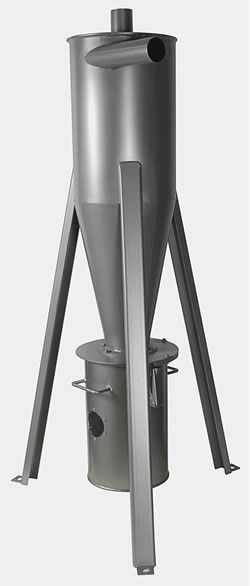
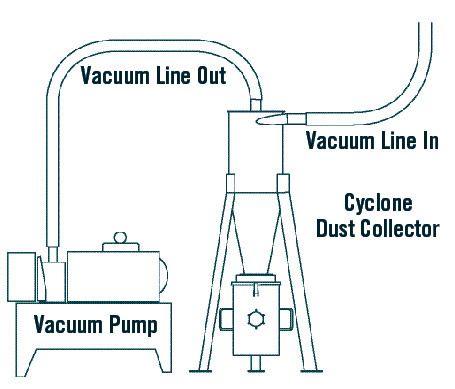
A cyclone dust collector protects the system vacuum pump from carryover dust and fines. It is free standing, sits between the pump filter and the conveying system, and uses cyclonic action to remove up to 99% of the fines drawn toward the pump. There is usually one cyclone per system pump, with no moving parts and no canister filters to clean.
Cyclone dust collectors are free standing and may be located anywhere between the pump filter and the conveying system. Their primary purpose is to protect a system vacuum pump from damage by carryover dust and fines. Usually, there is one cyclone per system pump.
A good cyclone dust collector will pay for itself many times over. If designed and built properly, the cyclonic action will it will remove up to 99% of carry over fines that are drawn towards, and can damage, the central pump in a vacuum conveying system.
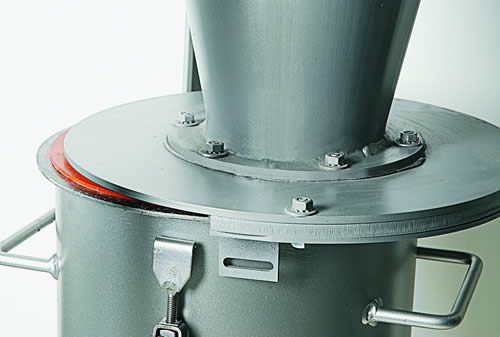
There are no moving parts and no bulky canister filters to clean. The fines can be easily emptied from a sealed dust collection pan under the cyclone.
Cyclone filters are sized to match the conveying line diameter and the air volume produced by the system vacuum pump.
Options:
- Drum dump – includes a dust sock that fits over a 30 gal. drum for fines collection
Features to look for:
- Sight glass on collection pan – allows visual confirmation of when to empty
- Quick release clamps on collection pan – for easy removal
- No parts or canister filters to replace
Notes:
- Not all cyclone dust collectors are created equal – be sure that it is rated to remove 99% of dust and fines.
- There are also Filter Dust Collectors. Some require that bulky cannister filters be cleaned regularly while others rely on a type of filter that traps the dust, then releases it into a collection bin.
Frequently Asked Questions
How is a cyclone dust collector sized?
Cyclone dust collectors are sized to match the conveying line diameter and the air volume produced by the system vacuum pump. Because their job is to protect that pump from carryover fines, a plant usually runs one cyclone per system pump rather than sharing one across several pumps.
How do you empty a cyclone dust collector?
Fines collect in a sealed dust collection pan under the cyclone and are emptied from there. A sight glass on the pan shows when it needs emptying, and quick release clamps make the pan easy to remove. A drum dump option adds a dust sock that fits over a 30-gallon drum.
What is the difference between cyclone and filter dust collectors?
A cyclone dust collector separates fines with cyclonic action and has no canister filters to replace. Filter dust collectors capture dust in a filter; some require bulky canister filters that must be cleaned regularly, while others trap the dust and then release it into a collection bin.
About the Authors

Vice President of Operations, Novatec
Greg Washburn is Vice President of Operations at Novatec and has been with the company for more than three decades. He is involved in all phases of engineering design and product manufacturing, giving him a broad perspective on how resin drying and conveying equipment moves from engineering concept through production and into real-world processing environments. Greg holds a B.S. in Mechanical Engineering from the University of Maryland, Baltimore County (UMBC) and an MBA from Loyola University Maryland. His experience spans engineering, manufacturing and operations across Novatec’s material-handling technologies.

Technology Manager, Novatec
Joshua Belisle is Technology Manager at Novatec, where his work focuses on simulation and technology development for resin drying. He earned a B.S. in Mechanical Engineering with a minor in Engineering Business from the University of Virginia in 2023 and joined Novatec that same year. Joshua uses simulation tools to investigate previously difficult-to-measure aspects of the drying process, helping Novatec better understand airflow, heat transfer and other variables that influence resin-drying performance.
Related Articles
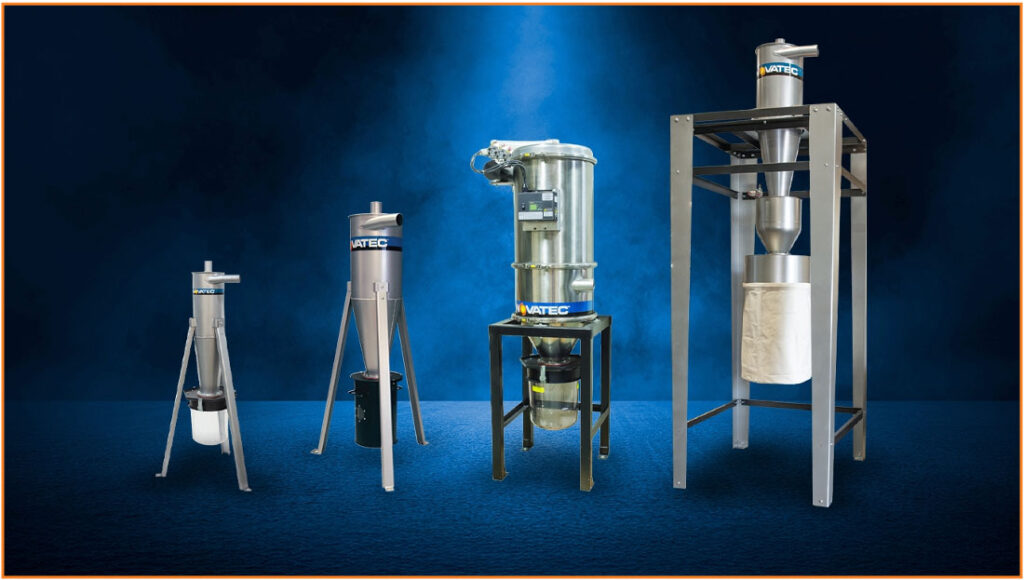
Compare cyclone and filter dust collectors for reducing fines, protecting equipment, and maintaining airflow.
Explore piping practices, specialty elbows, and velocity control that help minimize angel hair.
Review pump selection, airflow, filtration, and conveying controls for central vacuum systems.
Ask the Expert
