

By Greg Washburn and Joshua Belisle · Edited by Dana Gardner
Published August 8, 2024 · Reviewed by Greg Washburn · September 17, 2026
Summary
What should I look for in a pellet and regrind vacuum loader?
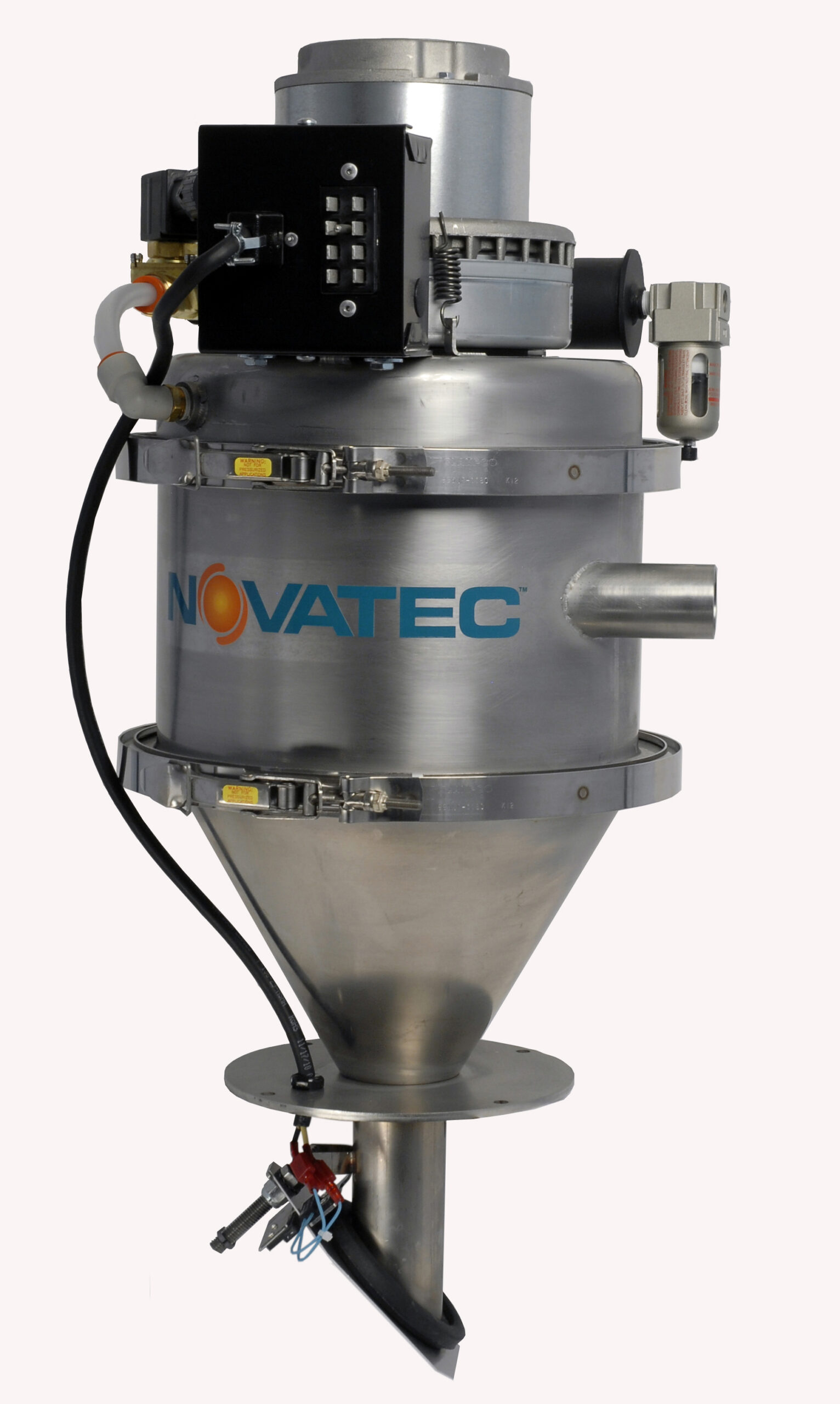
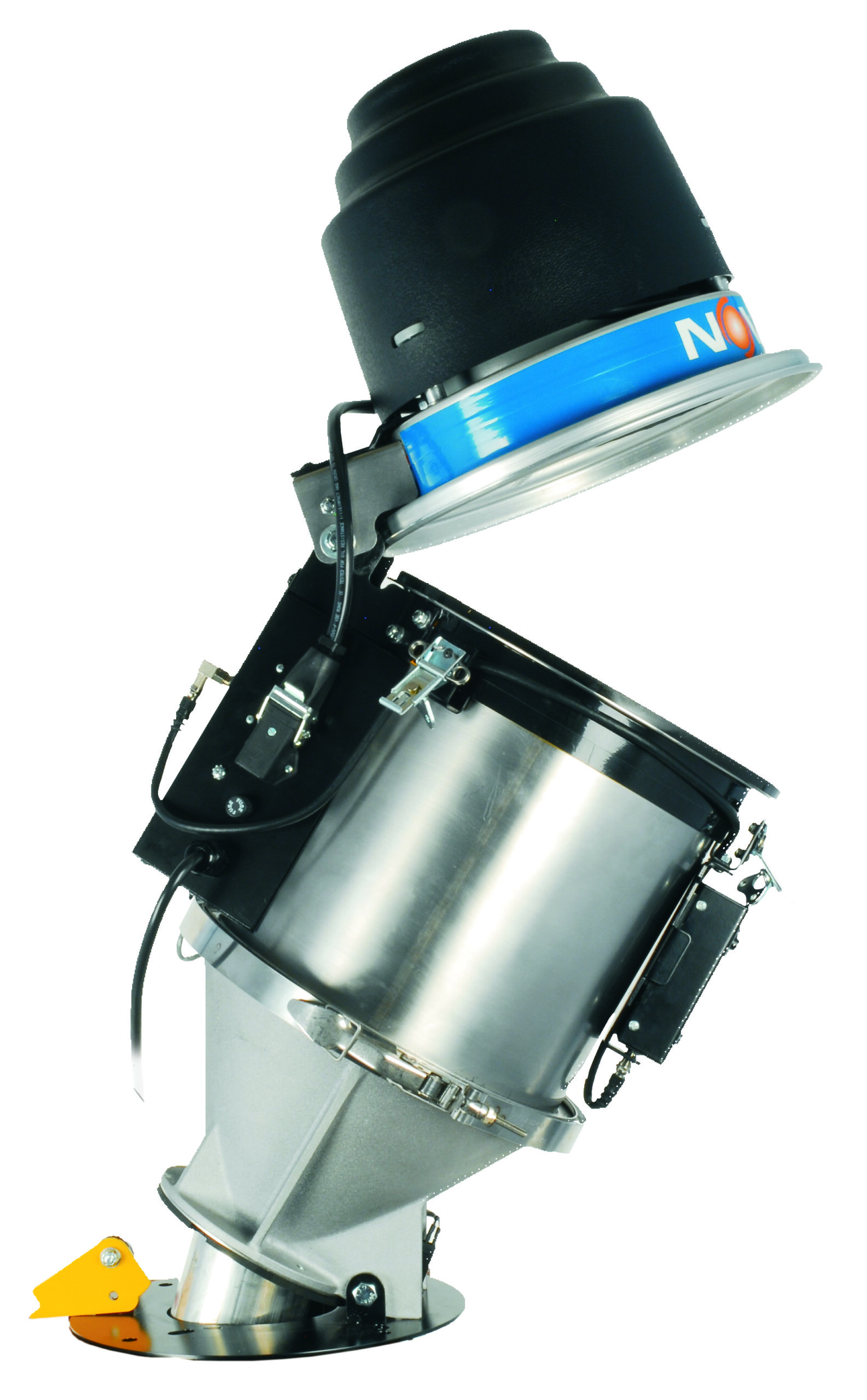
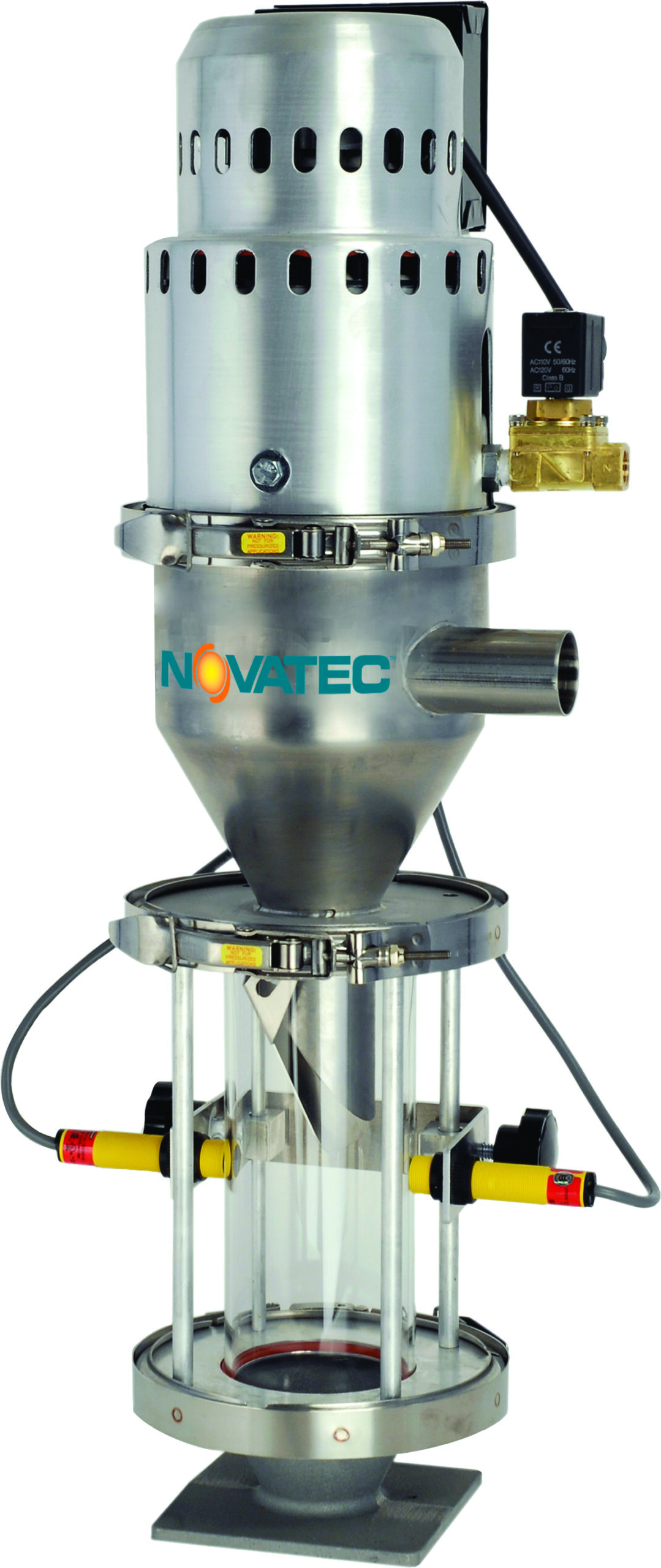
Look for a stainless steel body, a modular design for cleanout, a tangential material inlet with deflector flapper for cyclonic separation, a gasketed dump throat, a no-load alarm and automatic pulsed blowback. Vacuum loaders move pellets and regrind from one or more sources, usually a Gaylord, to a single destination such as a blender, drying hopper or machine throat. Hopper-mount and machine-mount models typically hold 1/8 to 1 cu. ft.
Vacuum loaders transfer pellets and regrind from one or more sources (usually a Gaylord) to a single destination (usually a blender, drying hopper or machine throat).
Hopper mount models (typically have capacities that range from 1/8 through 1 cu. ft.)
Machine mount models typically range from 1/8 through 1 cu. ft.
Options for abrasive or hot materials ( over 250° F.) are available.
There are several variations on loader design:
- Conventional dump throat
- Flat bottom with internal dump throat
- Internal filter screen to collect dust & fines
- Filter-less design
- Receivers may be stainless steel, carbon steel or aluminum
- Exterior surface may be painted or brushed – even electro-polished
Some features to look for include:
- Stainless steel body – wears longer
- Modular design – for easy access and cleanout
- Tangential Material Inlet Deflector/Flapper
Provides cyclonic air/material separation which minimizes material degradation
- Deflector flapper w/ gasket – ensures that blowback does not travel down material line
- Gasket on dump throat – maintains seal for high vacuum level
- ‘No-load’ alarm and silencer button – warns of empty material source
- Automatic pulsed blowback – to reduce frequency of manual cleaning
- Machine mount models should have level sensor – to avoid over loading
Typical accessories include:
- External proportioning valve & control– for layering virgin/regrind materials
Typical Option:
- Brushless motor – to reduce maintenance
Frequently Asked Questions
Why does a vacuum loader need a tangential inlet?
A tangential material inlet with a deflector flapper creates cyclonic air-and-material separation inside the receiver, which minimizes material degradation as pellets enter. The flapper, fitted with a gasket, also keeps blowback air from traveling back down the material line. A gasket on the dump throat maintains the seal needed to hold a high vacuum level.
Can a vacuum loader handle hot or abrasive material?
Yes, options for abrasive materials and for hot materials above 250°F are available. Receiver bodies come in stainless steel, carbon steel or aluminum, and a stainless body wears longer. Loader designs also vary in other ways: conventional or internal dump throat, an internal filter screen for dust and fines or a filter-less design, and painted, brushed or electro-polished exteriors.
Can one loader feed both virgin and regrind to a machine?
Yes. An external proportioning valve and control is a typical accessory that lets a loader layer virgin and regrind material. Other useful items include a no-load alarm with silencer button to warn when the material source is empty, automatic pulsed blowback to reduce manual filter cleaning, a level sensor on machine-mount models to prevent overloading, and a brushless motor option to cut maintenance.
About the Authors

Vice President of Operations, Novatec
Greg Washburn is Vice President of Operations at Novatec and has been with the company for more than three decades. He is involved in all phases of engineering design and product manufacturing, giving him a broad perspective on how resin drying and conveying equipment moves from engineering concept through production and into real-world processing environments. Greg holds a B.S. in Mechanical Engineering from the University of Maryland, Baltimore County (UMBC) and an MBA from Loyola University Maryland. His experience spans engineering, manufacturing and operations across Novatec’s material-handling technologies.

Technology Manager, Novatec
Joshua Belisle is Technology Manager at Novatec, where his work focuses on simulation and technology development for resin drying. He earned a B.S. in Mechanical Engineering with a minor in Engineering Business from the University of Virginia in 2023 and joined Novatec that same year. Joshua uses simulation tools to investigate previously difficult-to-measure aspects of the drying process, helping Novatec better understand airflow, heat transfer and other variables that influence resin-drying performance.
Related Articles

Compare loader motors, filters, discharge valves, and controls to match pellets, regrind, and powders to your operation.
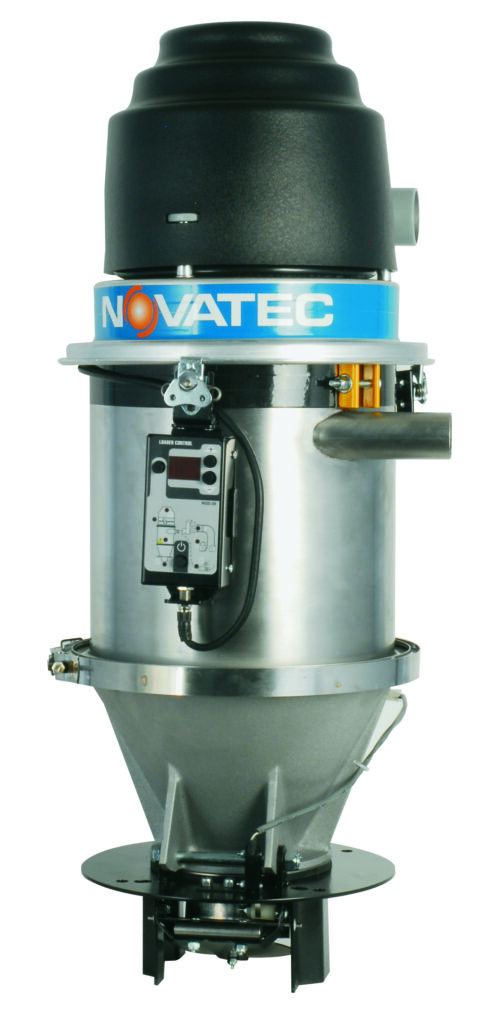
See loader features that simplify access, cleaning, material visibility, and vacuum-line connections.
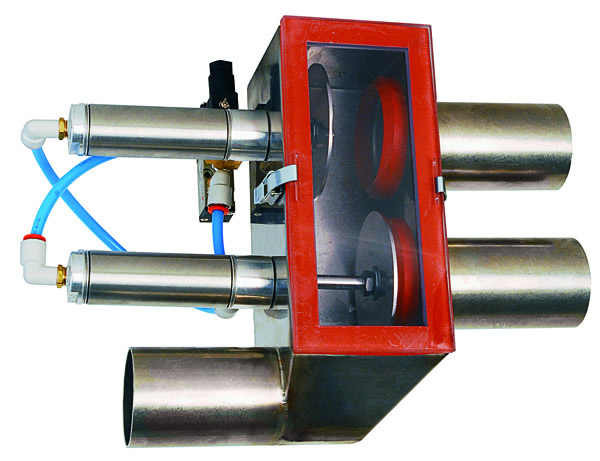
Learn how proportioning valves alternate virgin and regrind, and how purge valves clear conveying lines.
Ask the Expert
