

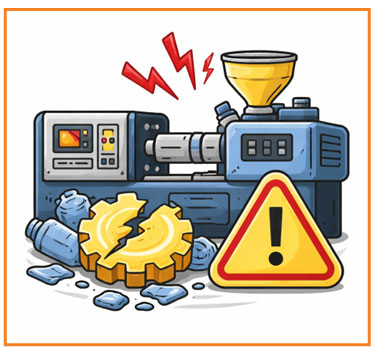
 The most obvious consequence is equipment damage. Vacuum pumps are particularly vulnerable…if fines make it past your filtration and into the pump, you’re looking at bearing damage, oil contamination, gumming of pump lobes, and eventually catastrophic failure. A seized pump doesn’t just need repair; it often needs a rebuild or complete replacement. Both take time, and while you’re waiting, your entire conveying system is down.
But pumps aren’t the only concern. Dust accumulates in electrical enclosures, creating potential short circuits. It clogs cooling systems, causing motors to overheat. It builds up in silencers and — this one keeps plant managers up at night — it can catch fire. We’ve seen it happen more than once.
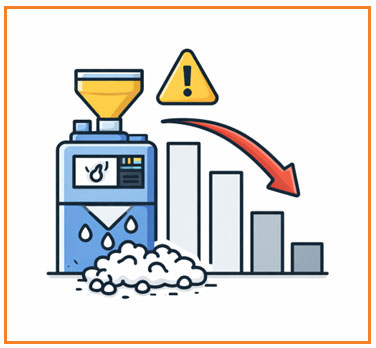 Here’s where things get subtle…and expensive. Your dryers depend on airflow to function. Air carries heat into the hopper and carries moisture out. When filters blind with dust, airflow drops. When airflow drops, heat transfer suffers. When heat transfer suffers, material doesn’t dry properly.
The insidious part is that this degradation happens gradually. You don’t wake up one morning to a dryer that’s completely failed. Instead, you notice injection pressures creeping down. Parts start going out of spec. Edges of hoppers don’t dry as well as the center. By the time you trace the problem back to blinded filters, you’ve been running suboptimal material for days or weeks.
And there’s a safety angle here too: reduced airflow in heater boxes means less cooling. Heat buildup alone can create dangerous temperatures when airflow stops.
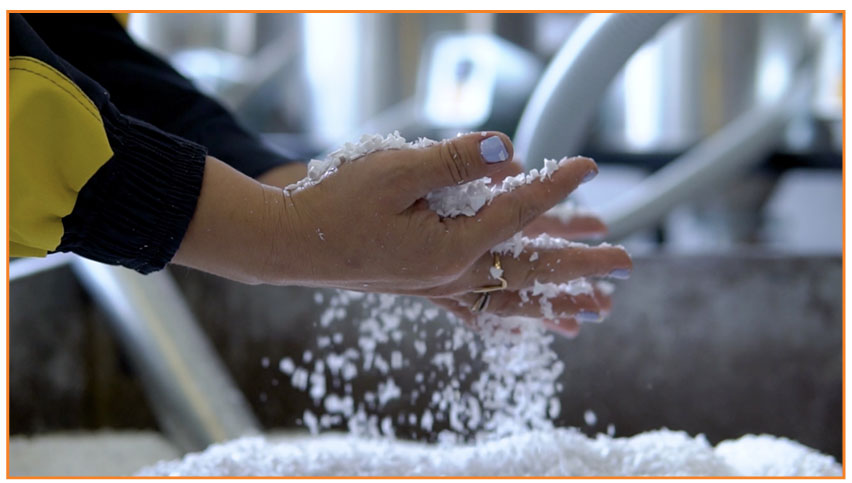
 Dust and fines that make it into your process don’t just disappear. Those fine particles melt faster than undamaged pellets…sometimes much faster. The result? Burned material, discoloration, black specks, and weakened parts. If you’re running engineering-grade resins where molecular integrity matters, contamination from degraded fines can compromise the mechanical properties of finished parts.
 Beyond the obvious equipment and quality issues, dust creates a cascade of hidden costs. Filter replacements add up. Maintenance hours spent cleaning and troubleshooting add up. Production delays while you chase performance problems add up.
And then there’s the human side. OSHA has air quality standards for a reason. A dusty, uncomfortable work environment affects employee retention and can create workman’s comp exposure. It’s not just about the equipment…it’s about the people running it.
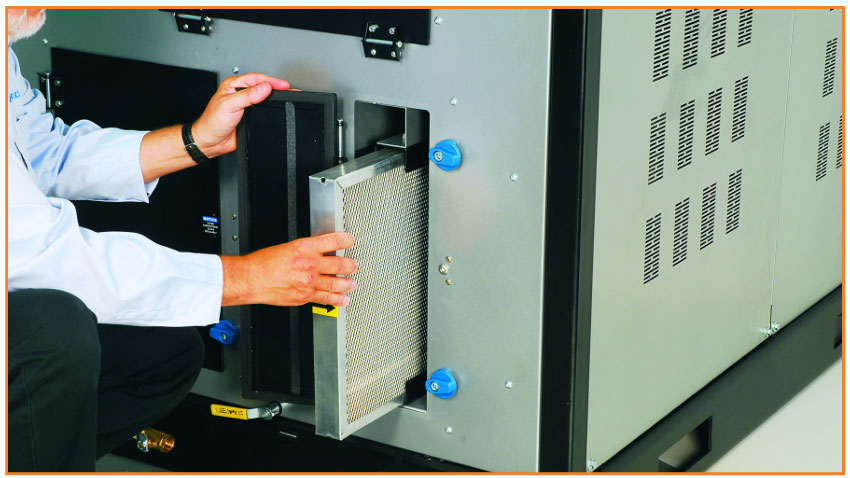
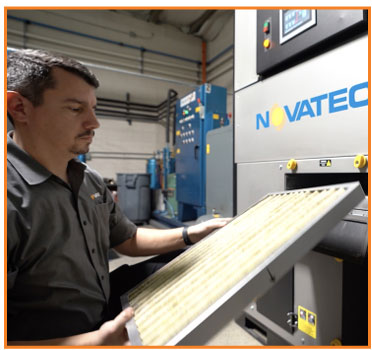 Every piece of equipment in your plant — receivers, dryers, vacuum pumps — comes with some level of built-in filtration. These filters are your last line of defense, designed to catch whatever dust makes it through the rest of your system.
Standard machine filters typically capture particles in the 2 – 10 micron range. Enhanced filtration options — HEPA filters, smaller micron ratings — can improve capture efficiency and help with both environmental air quality and process quality.
But here’s the thing: machine-level filters were never designed to handle high dust loads. They’re sized and rated for the residual dust that gets past your primary collection system. If you’re relying solely on machine filters to catch all your dust, you’re asking them to do a job they weren’t built for…and you’ll pay for it in constant maintenance and performance degradation.
Think of machine filters as the seat belt in your car. Essential? Absolutely. But you still want brakes, airbags, and crumple zones doing the heavy lifting before the seat belt ever has to activate.
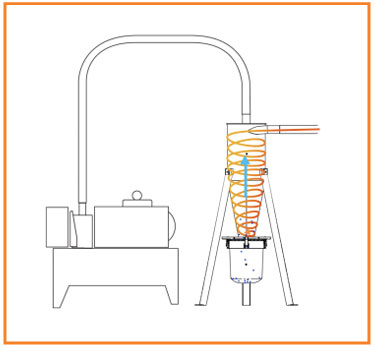 Cyclone dust collectors take a fundamentally different approach to dust removal. Instead of trapping particles in a filter medium, they use physics, specifically centrifugal force and gravity, to separate dust from the airstream.
If you’ve ever been on that carnival ride where everyone stands against the wall and the whole thing spins until you’re pinned in place, you understand the basic principle. As the ride slows down, gravity takes over and you slide toward the floor. Cyclone dust collectors work the same way.
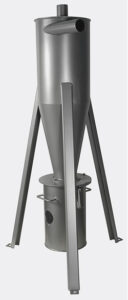
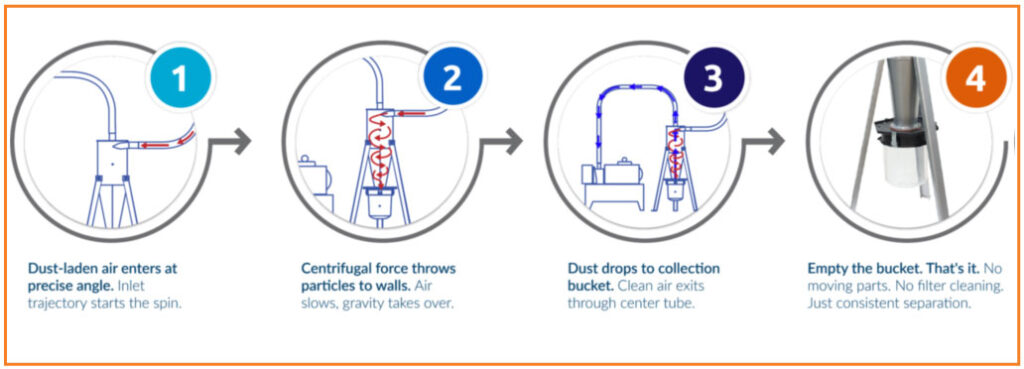
Here’s the process: Dust-laden air enters the cyclone tangentially…that is, it enters at an angle that starts it spinning. The cyclone upper body is larger than the inlet tube, so the air expands and slows down as it enters. That spinning air throws heavier particles toward the walls. As velocity decreases further, gravity takes over and particles drop into a collection bucket below. Clean air exits through a center tube at the top.
The beauty of this design is that there’s no filter to blind. No filter means no performance degradation over time. A well-designed cyclone maintains consistent, near-peak efficiency from the moment you turn it on until the moment you turn it off…day after day, month after month. The only maintenance is emptying the collection bucket.
This is the key advantage that makes cyclones so valuable: they capture dust without significant impact to system performance. Your machine filters still provide that final line of defense, but they’re no longer fighting the full dust load. Instead of blinding in hours or days, they can go weeks or months between cleanings.
 Cyclone dust collectors take a fundamentally different approach to dust removal. Instead of trapping par cles in a filter medium, they use physics, specifically centrifugal force and gravity, to separate dust from the airstream.
If you’ve ever been on that carnival ride where everyone stands against the wall and the whole thing spins un l you’re pinned in place, you understand the basic principle. As the ride slows down, gravity takes over and you slide toward the floor. Cyclone dust collectors work the same way.
Here’s the process: Dust-laden air enters the cyclone tangen ally…that is, it enters at an angle that starts it spinning. The cyclone upper body is larger than the inlet tube, so the air expands and slows down as it enters. That spinning air throws heavier par cles toward the walls. As velocity decreases further, gravity takes over and par cles drop into a collec on bucket below. Clean air exits through a center tube at the top.
The beauty of this design is that there’s no filter to blind. No filter means no performance degrada on over me. A well-designed cyclone maintains consistent, near-peak efficiency from the moment you turn it on un l the moment you turn it off…day a er day, month a er month. The only maintenance is emptying the collec on bucket.
This is the key advantage that makes cyclones so valuable: they capture dust without significant impact to system performance. Your machine filters s ll provide that final line of defense, but they’re no longer figh ng the full dust load. Instead of blinding in hours or days, they can go weeks or months between cleanings.
 For extremely dusty applications — heavy regrind operations, powder handling, materials that generate exceptional amounts of fines — sometimes a cyclone alone isn’t enough. That’s where filter dust collectors come in.
The best filter dust collectors combine cyclonic pre-separation with cartridge filtration. The cyclone action handles the bulk of the dust load, and the filters catch whatever gets through. Because the cyclone does the heavy lifting, the filters don’t blind nearly as fast as they would handling the full dust load alone.
Advanced units include self-cleaning features…compressed air pulses that blow accumulated dust off the filter cartridges automatically. This extends filter life and maintains more consistent performance over time.
Filter dust collectors typically achieve filtration down to 1 micron with PTFE-coated polyester filters. That’s finer than what most cyclones can capture alone, making these units ideal for applications where even the smallest particles need to be removed before air returns to the system or the environment. (For extreme applications, HEPA cartridges down to 0.3 micron are also available.)
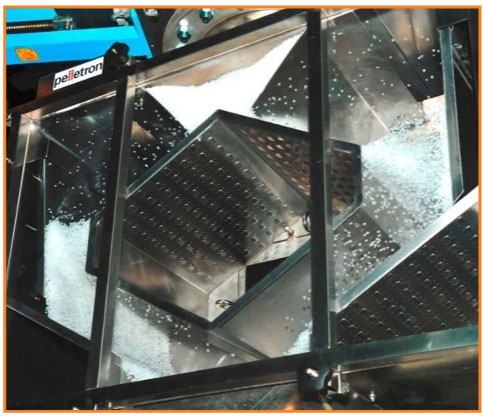 For granulation applications where dust management is absolutely critical, elutriation systems represent the top tier of dust separation technology. Names like Kongskilde and Pelletron are well-known in this space.
Elutriation systems – typically installed outside the standard conveying system – use reverse airflow to actively separate dust from material as it moves through the system. They’re often installed between grinders and surge bins, or between surge bins and downstream processes. The technology is effective, but it comes at a premium price point.
For most plastics processors, elutriation systems are overkill. They make sense for high-volume granulation operations where the cost is justified by the scale of the dust problem. But for typical conveying and drying applications, cyclone-based solutions provide the best balance of effectiveness and value.
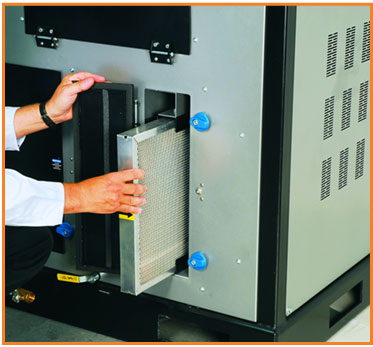 This is your baseline — the filters built into your receivers, dryers, and pumps. Every processor has this. It’s the minimum required to operate. If you’re running clean virgin material over short distances with low throughput, basic machine filtration might be sufficient. But for most real-world operations, relying solely on Tier 1 means constant filter maintenance and gradual repetitive performance degradation.
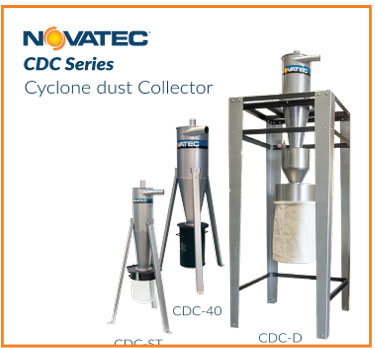
 Adding a cyclone dust collector (available in manual-empty or automatic drum-dump configuration) upstream of your pump or dryer transforms your filtration strategy. The cyclone handles the bulk of the dust load — typically 99% of particles — leaving your machine filters to deal with only the residual fines. This extends filter life dramatically, maintains consistent system performance, and reduces maintenance requirements from daily or weekly to monthly or less.
For most plastics processors, Tier 2 represents the sweet spot: highly effective, reasonably priced, and requiring only minimal maintenance. A cyclone typically pays for itself quickly through reduced filter costs and maintenance time alone.
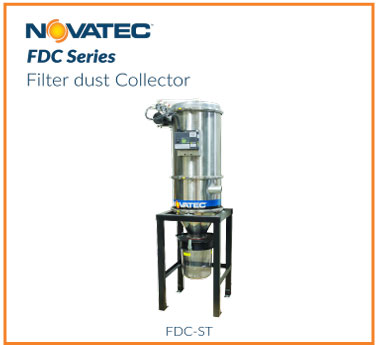
 When your application generates exceptional dust loads — heavy regrind percentages, powder materials, extremely long conveying distances — a filter dust collector provides the additional protection you need. The combination of cyclonic pre-separation and active cartridge filtration with self-cleaning blowback handles even the most challenging dust environments.
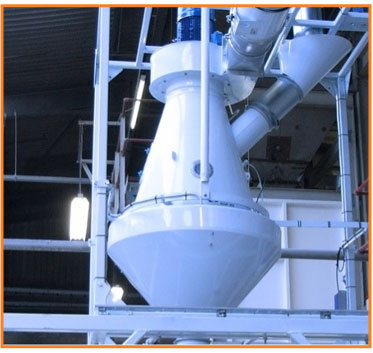 For granulation operations and other specialty applications, premium solutions like Kongskilde systems provide maximum dust separation. These represent significant investments but deliver unmatched performance for operations where nothing less will do.
The key is matching your tier to your actual needs. Over-engineering adds cost without benefit. Under-engineering creates problems that cost far more to fix than prevent.
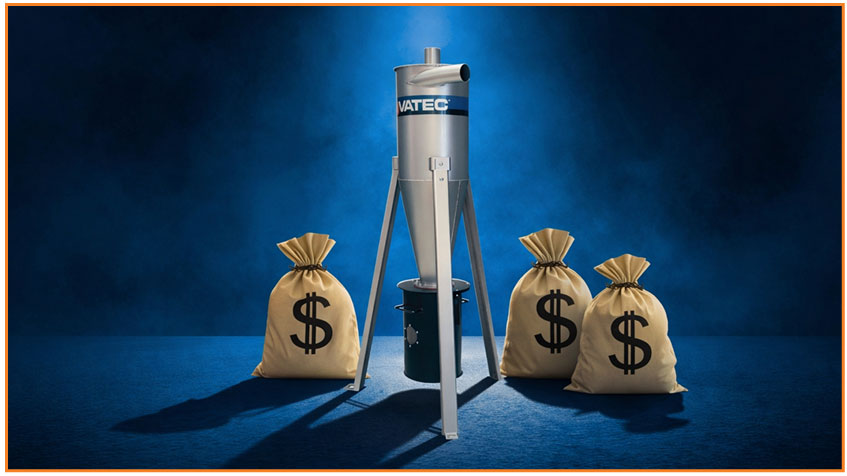
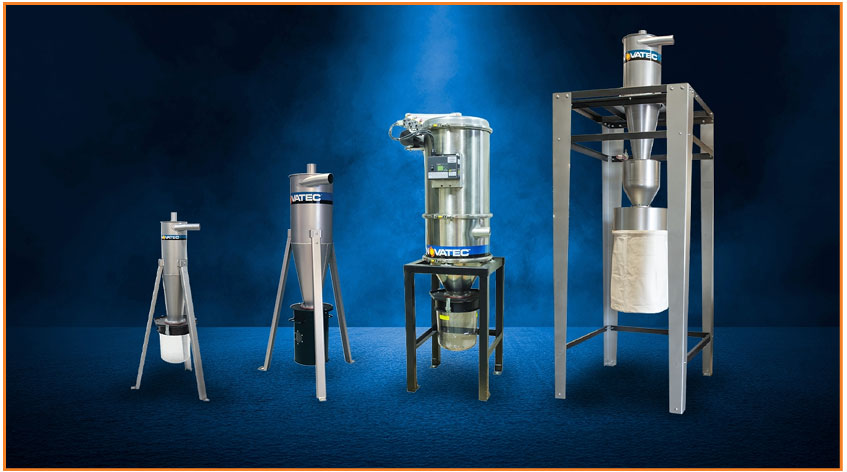
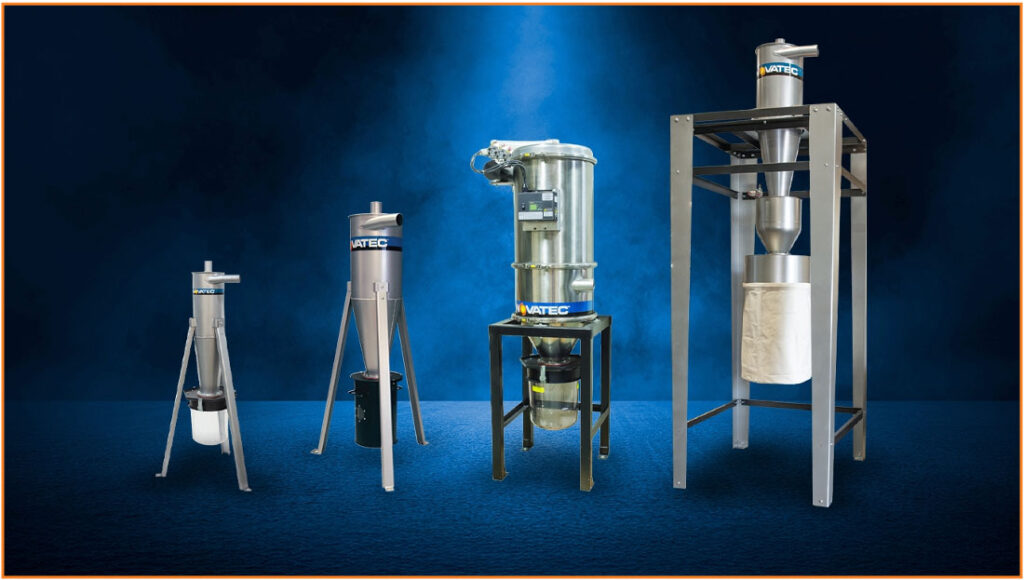
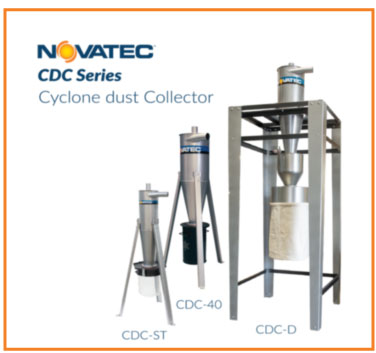 Our CDC Series cyclone dust collectors embody everything we believe about this technology: proven design, heavy-duty construction, and minimal-maintenance requirements.
There are no moving parts. No bulky canister filters to clean. No motors, no belts, no valves. Just physics doing what physics does…separating dust from air through cyclonic action and gravity. The only maintenance is emptying the collection bucket, and our sealed dust collection pan makes even that simple.
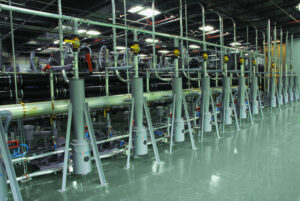
CDC units for conveying applications are available for pumps ranging from 3 HP to 25 HP, with inlet sizes from 1.5 to 4 inches. Larger units for drying applications are available up to 12 inches. They’re free-standing, so you can locate them anywhere between your pump filter and your conveying system. Heavy-gauge welded steel construction means they’re built to last…and we back that with a 5-year warranty.
For operations that need easy disposal of collected fines, our drum dump configuration elevates the cyclone on a frame so you can roll a standard drum underneath for collection.
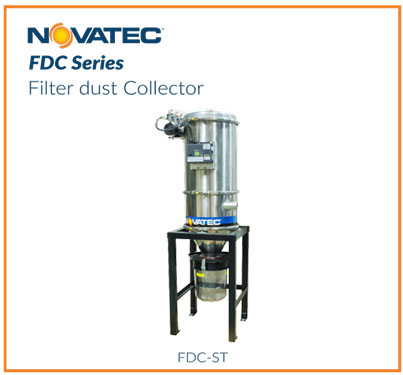
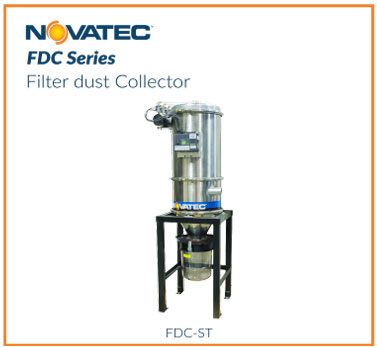 For extremely dusty applications — heavy regrind operations, powder handling, or situations where even 99% cyclone efficiency isn’t quite enough — Novatec FDC Series filter dust collectors add an extra layer of protection.
The FDC still uses cyclonic action for initial separation, but adds three PTFE-coated cartridge filters that capture particles down to 1 micron with 99% efficiency. An automatic compressed air pulse-clean system keeps the filters clear without manual intervention. Because the cyclone handles the bulk of the dust load first, the filters don’t blind nearly as fast as standalone filter systems.
We’ve had customers who wanted to be able to change filters without shutting down their process. Our solution? A second set of filters on a quick-change lid. Two-minute changeover instead of twelve. Downtime is production — eliminating changeover time is money in your pocket.
Like our CDC Series, the FDC is also available in drum-dump configurations for easy disposal of collected material.