

By Greg Washburn and Joshua Belisle · Edited by Dana Gardner
Published August 7, 2024 · Reviewed by Greg Washburn · June 2, 2026
Summary
Why won't my new vacuum conveying system load material at startup?
Startup problems in a new conveying system can usually be solved with a few checks. Confirm the station is turned on at the controller, the vacuum line is attached, the material hose is on the right source, and source valves open and close properly. Also check that the air probe is at least 50% open, hoses have no holes, and material flows freely without clogs.
If a problem crops up when first starting up a new system, you can usually solve it by answering one or more of the following questions:
- Is the station turned on? Verify its status at the controller.
- Is the vacuum line physically attached to this station?
- Is the material hose/line attached to the proper source (hopper, surge bin, Gaylord)? If you are using source valves, verify that the proper valve is assigned to this station.
- Is the source valve opening and closing properly?
- Is enough air mixing with the material? The system cannot move material without air mixed in with the material flow. Check the air probe at the source and make sure that the probe is at least 50% open.
- Do material hoses have any holes or breaks?
- Is the material flowing freely from the source?
- Is material clogged in the hopper?
- Is there sufficient material at the source point?
- Is material clogged in the line?
- If there is there a gasket on the bottoms of the dump throats on the vacuum receivers, make sure the flapper is sealing properly against the gasket. (Conical valves are sometimes used to seal the dump throat but they are relatively expensive.)
- Is one station loading correctly and the others are not? Check that station to verify the station valve is not stuck in the open position. This will prevent the other stations from loading properly.
Frequently Asked Questions
Why is only one conveying station loading while others are not?
Check the station that is loading to verify its station valve is not stuck in the open position. A valve stuck open prevents the other stations from loading properly. It belongs on the startup checklist alongside confirming each station is turned on at the controller and physically attached to its vacuum line.
How far open should the conveying air probe be?
The system cannot move material without air mixed into the material flow. Check the air probe at the source and make sure it is at least 50% open. The probe setting is one of the first checks when a new station fails to load, along with making sure material hoses have no holes or breaks.
Why won't a vacuum receiver hold vacuum at the dump throat?
If there is a gasket on the bottom of the receiver’s dump throat, make sure the flapper seals properly against it. A poor seal at the dump throat is one of the startup checks for a receiver that is not loading. Conical valves are sometimes used to seal the dump throat instead, but they are relatively expensive.
About the Authors

Vice President of Operations, Novatec
Greg Washburn is Vice President of Operations at Novatec and has been with the company for more than three decades. He is involved in all phases of engineering design and product manufacturing, giving him a broad perspective on how resin drying and conveying equipment moves from engineering concept through production and into real-world processing environments. Greg holds a B.S. in Mechanical Engineering from the University of Maryland, Baltimore County (UMBC) and an MBA from Loyola University Maryland. His experience spans engineering, manufacturing and operations across Novatec’s material-handling technologies.

Technology Manager, Novatec
Joshua Belisle is Technology Manager at Novatec, where his work focuses on simulation and technology development for resin drying. He earned a B.S. in Mechanical Engineering with a minor in Engineering Business from the University of Virginia in 2023 and joined Novatec that same year. Joshua uses simulation tools to investigate previously difficult-to-measure aspects of the drying process, helping Novatec better understand airflow, heat transfer and other variables that influence resin-drying performance.
Related Articles

Review receiver components and selection for a central resin conveying system.
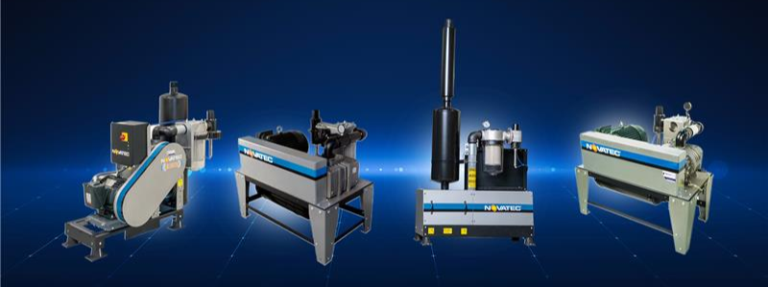
Compare pump types and match vacuum performance to your conveying system.
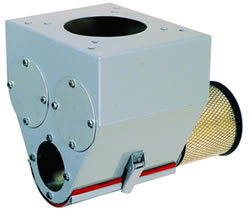
See how take-off boxes introduce material and air from storage vessels and drying hoppers.
Ask the Expert
