

By Greg Washburn and Joshua Belisle · Edited by Dana Gardner
Published August 3, 2024 · Reviewed by Greg Washburn · August 17, 2026
Summary
What is a vacuum loader and how does it work?
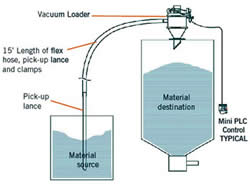
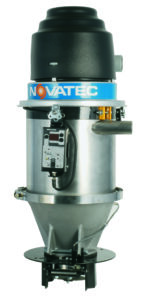
A vacuum loader is a self-contained unit that moves pellets, regrind, or powder from a single source, usually a gaylord, to a single destination such as a blender, drying hopper, or machine throat. A pickup lance sits in the material, a flexible hose runs to the loader mounted on the destination, and a small motor creates the vacuum. A control with programmable load and dump times runs the cycle.
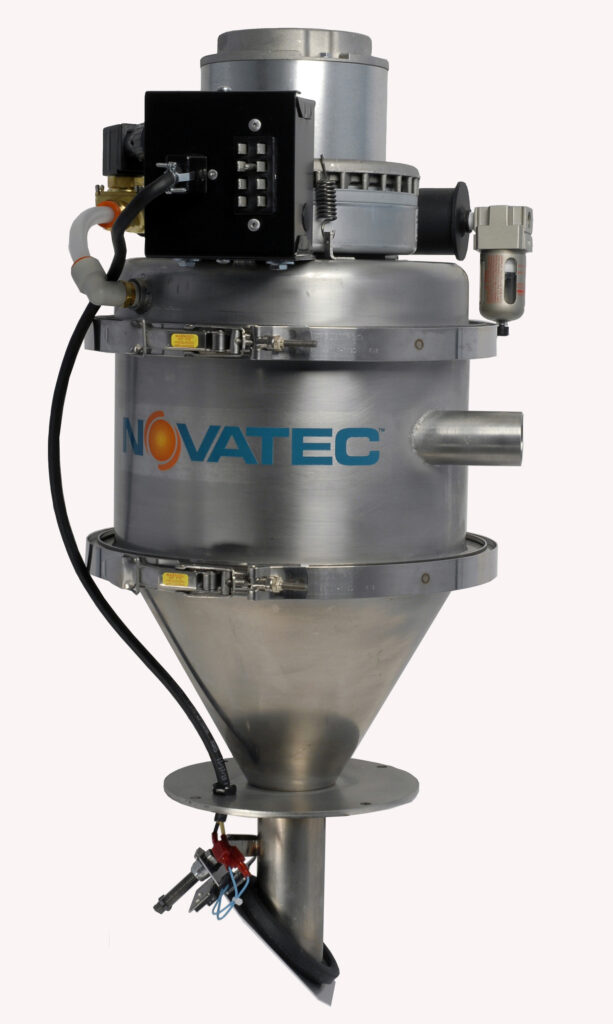
Vacuum loaders are the simplest version of a ‘resin conveying system’ but they are not an integral part of a central conveying system. Self-contained vacuum loaders are used to transfer pellets, regrind and powders from a single source (usually a Gaylord) to a single destination (usually a blender, drying hopper or machine throat). A pickup lance is inserted into the material source container and a length of flexible hose connects the lance to the loader. The loader is mounted on top of the destination point and a small powerful motor creates a vacuum that sucks the material up through the pickup lance and flexible hose into the body of the loader.
A simple control with programmable Load and Dump times is provided with each unit to time the loading and dumping of the loader.
Self-contained loaders accomplish the loading process automatically – eliminating the need for a person to climb a ladder with a bucket of resin to fill a hopper or bin. This saves labor, reduces material spillage and increases safety.
There are loaders designed mainly for pellets and regrind while others are designed specifically for powders. There are hopper mount and machine mount versions and Compressed Air Loaders.
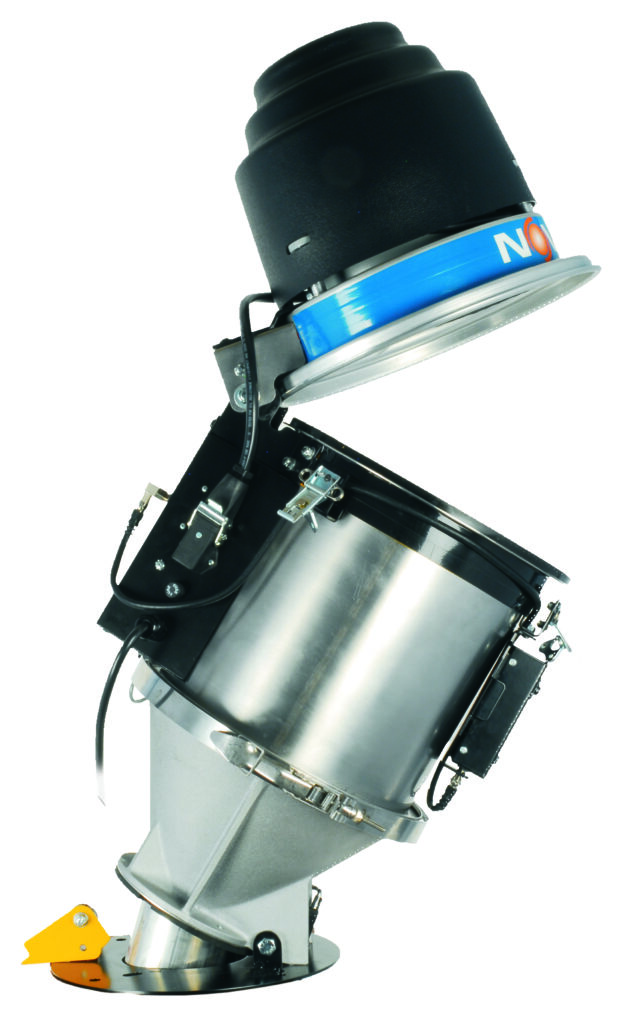
There are conventional vacuum loaders and more recent designs that have features like slanted lids for easy access, clear glass center sections, so operation can be viewed, and flat bottoms that do not protrude down into the container on which they are mounted.
Loaders range in size from 1/8 through 1 cu.ft. depending on design. Your equipment supplier can help you choose the correct design and size based on your specific application.
There are definite drawbacks to having a plant full of loaders and any processor can greatly improve plant efficiency and reduce energy and labor costs by replacing loaders with a central conveying system. Investment Payback in Months – Not Years
Frequently Asked Questions
What sizes do vacuum loaders come in?
Loaders range from 1/8 cubic foot up to 1 cubic foot depending on the design. There are versions built mainly for pellets and regrind and others built specifically for powders, plus hopper-mount and machine-mount configurations and compressed air loaders. Your equipment supplier can help match the design and size to the application.
Why use a vacuum loader instead of filling hoppers by hand?
A self-contained loader handles the loading cycle automatically, so no one has to climb a ladder with a bucket of resin to fill a hopper or bin. That saves labor, reduces material spillage, and improves safety. A programmable control times each load and dump cycle.
When should I replace vacuum loaders with a central conveying system?
A plant full of individual loaders has drawbacks: each unit serves one source and one destination and is not part of a central conveying system. Replacing loaders with a central conveying system can improve plant efficiency and reduce energy and labor costs, and the payback on that investment is measured in months rather than years.
About the Authors

Vice President of Operations, Novatec
Greg Washburn is Vice President of Operations at Novatec and has been with the company for more than three decades. He is involved in all phases of engineering design and product manufacturing, giving him a broad perspective on how resin drying and conveying equipment moves from engineering concept through production and into real-world processing environments. Greg holds a B.S. in Mechanical Engineering from the University of Maryland, Baltimore County (UMBC) and an MBA from Loyola University Maryland. His experience spans engineering, manufacturing and operations across Novatec’s material-handling technologies.

Technology Manager, Novatec
Joshua Belisle is Technology Manager at Novatec, where his work focuses on simulation and technology development for resin drying. He earned a B.S. in Mechanical Engineering with a minor in Engineering Business from the University of Virginia in 2023 and joined Novatec that same year. Joshua uses simulation tools to investigate previously difficult-to-measure aspects of the drying process, helping Novatec better understand airflow, heat transfer and other variables that influence resin-drying performance.
Related Articles

Compare motors, filters, discharge valves, and maintenance features to choose a self-contained loader.
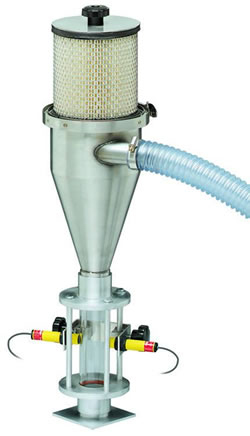
See how venturi loaders use plant compressed air and compare their applications, options, and operating costs.
See loader features that simplify access, cleaning, material visibility, and vacuum-line connections.
Ask the Expert
